
The Body Politic: Japanese artist Mari Katayama challenges attitudes toward the differently abled in her debut U.S. solo show
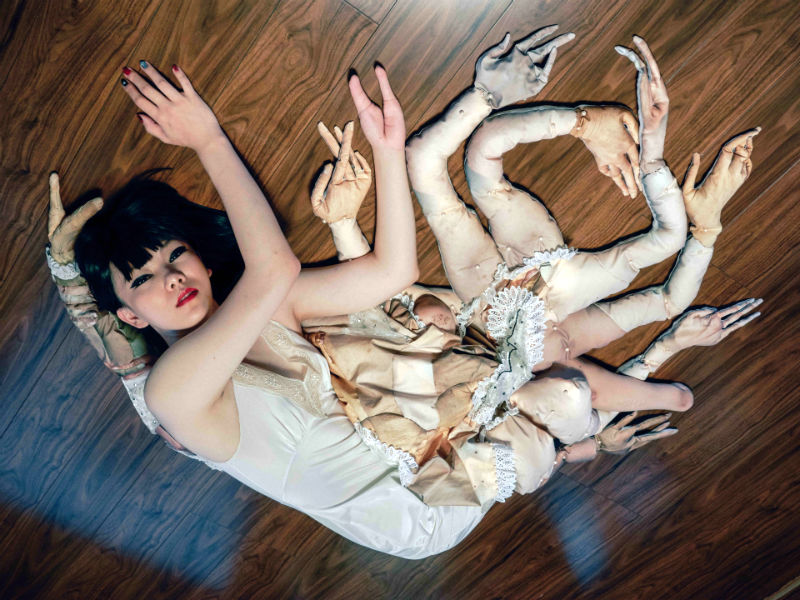
The first solo show in the United States for Japanese artist Mari Katayama is right here in Ann Arbor.
Katayama’s works are on display at the University of Michigan Museum of Art in the Irving Stenn Jr. Family Gallery through January 26, 2020. Her creations include both photographs and sculptures that disrupt normative viewing of the body, which weave a narrative that rejects dominant cultural and societal attitudes toward disabled bodies. Katayama not only uses her own body as a subject, but she also incorporates surrealist, complex, and skillful handmade prosthetics from textiles and other materials. Her works explore concepts of the self, the body and objectification, voyeurism, and agency.
Rock 'n' Roll Theater: John Cameron Mitchell took listeners on a journey at Hill Auditorium
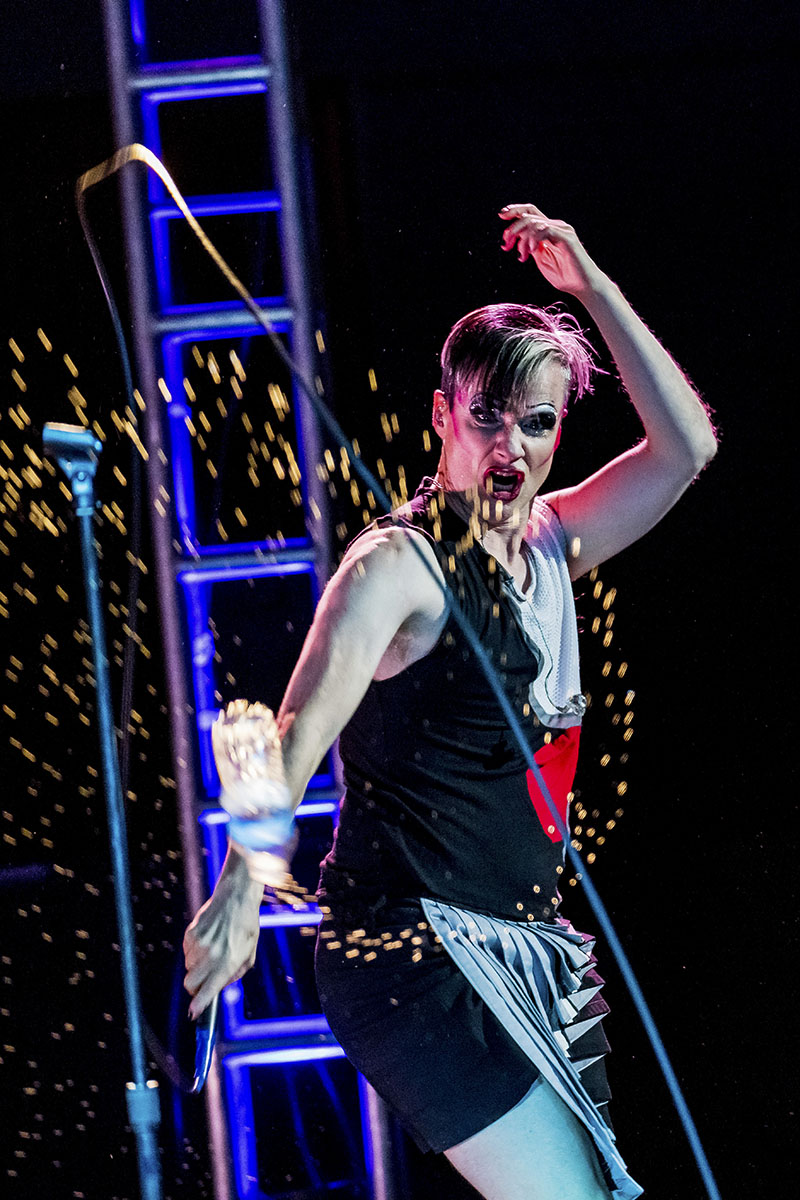
Saturday night’s Hill Auditorium performance by John Cameron Mitchell drew a crowd that likely skewed a bit younger and edgier than many University Musical Society audiences.
From where I sat, bold body art and piercings, asymmetrical haircuts, and statement eyeglasses abounded. And although about two decades have passed since Mitchell first created and performed in the groundbreaking show (and film) that would become his calling card, Hedwig and the Angry Inch, he not only rocked Hill Auditorium on his ongoing Origin of Love Tour but crowd-surfed, Superman-style, during an encore number.
But the two-hour concert kicked off with a direct reference from Hedwig, as powerhouse guest vocalist Amber Martin arrived first on stage and announced, “Ladies and gentlemen, whether you like it or not … John Cameron Mitchell!”
All the Young Doogs: Ypsilanti's Doogatron makes electronic music with a human touch
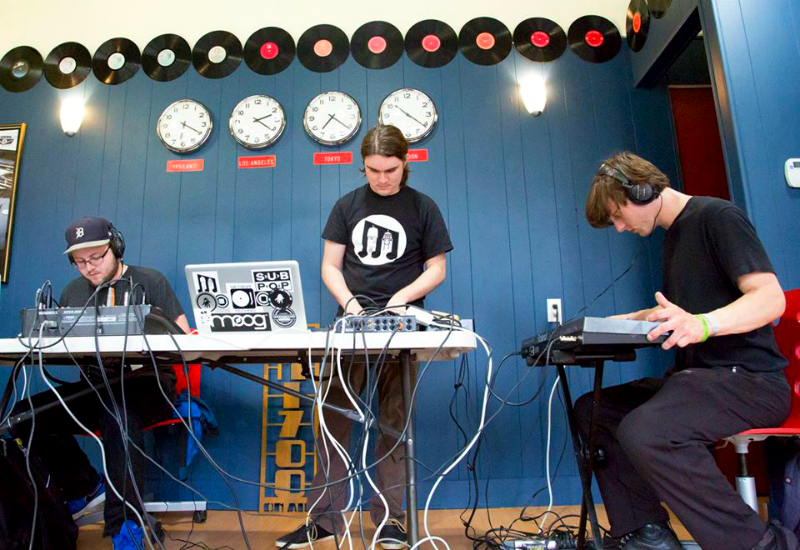
Doogatron is one of three acts performing at the Ann Arbor Synth Expo (AASE) on Saturday, November 9 at AADL's downtown location. Below is an interview we did with the group earlier this year, prefaced by a band update written by synth player Stevie:
We've mostly been recording and trying different workflows this year. These new processes have yielded a few singles we're excited about releasing next year. Ann Arbor Synth Expo will probably be the only chance to hear some bits and pieces of those before we put them out. We also did some remixes this year that we're debating on releasing or just keeping in our back pocket to play at shows. The last of four EPs we're releasing this year is out on Friday, 11/15/19. The other three are currently available on our Bandcamp and all streaming platforms. Mike moved to Brooklyn in May so he won't be appearing with us at the AASE but he recorded with us quite a bit earlier this year and he might continue recording with us remotely.
Synth music is often a solitary exercise. It's easy enough for one person to program all the music and not have to deal with band dynamics.
Electronic music duos are more common and count influential acts such as Orbital, Mouse on Mars, Autechre, Boards of Canada, Coil, and many more in those ranks.
Less common is a synthesizer trio, quartet, or quintet, but there is a rich history of synth groups, too, from Tangerine Dream, Kraftwerk, Harmonia, Throbbing Gristle, Add N to (X), and Hot Chip. The combination of personalities mixed with live playing over sequenced sections gives the music a more human quality, and Washtenaw County trio Doogatron is part of this lineage.
Stevie, Kyle, and Mike -- family names are for families -- make loose-limbed techno that mixes programmed parts on computer and live playing on vintage synths. The group's sound is elastic and trippy even as it's framed by linear rhythms.
Doogatron's self-titled debut LP came out Nov. 2, 2018, and the group has followed that with a New Year's Day 2019 mix of original tunes, reworked album cuts, and earlier tunes initially heard on Soundcloud. In February, Doogatron will release the first of at least four EPs/singles scheduled for this year. "Each release comes from one continuous recording session," Stevie said, "so each track will serve as a part one, part two, part three experience," starting with "Before Subsidized Time" b/w "After Subsidized Time."
Stevie gave us the lowdown on Doogatron's history, name, and work process.
Instinct to Play: Thollem McDonas at Kerrytown Concert House
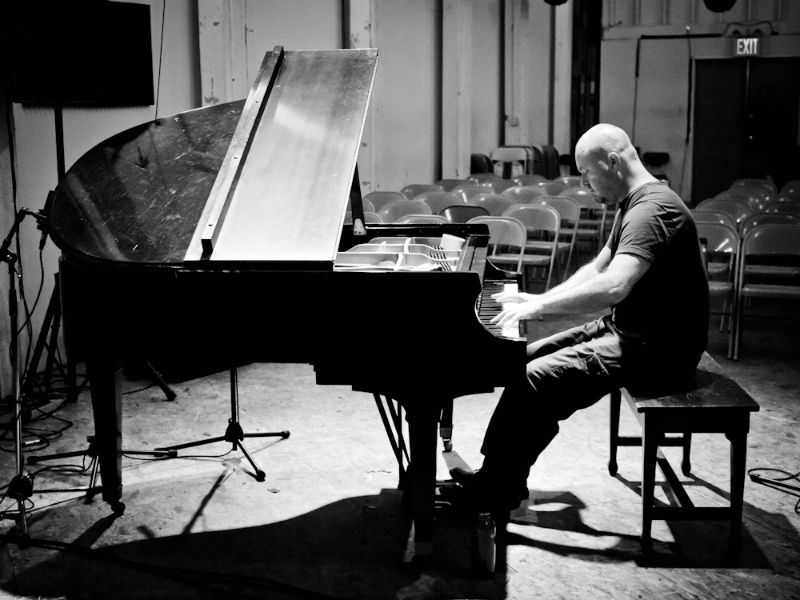
This article on June 28, 2017. We're re-running it because McDonas is returning to Kerrytown Concert House on Thursday, November 7, and he'll again collaborate with local improvisors Piotr Michalowski and Abby Alwin for an evening of spontaneous music.
Thollem McDonas might be a compulsive collaborator. The American pianist, composer, keyboardist, songwriter, activist, teacher, and author's many projects have included several renowned, and lesser known, players over the years, and he doesn't seem to be slowing.
From improvisations with perennial experimental music headliners -- guitarist Nels Cline; double bassist William Parker; the late composer, accordionist, and electronic music pioneer Pauline Oliveros -- to his Italian agit-punk unit Tsigoti and the art-damaged spiel of the Hand to Man Band (also featuring American punk icon Mike Watt on bass and Deerhoof's John Dietrich on guitar), there's little ground McDonas hasn't covered or isn't covering. He might just be the ideal "six-degrees-of" candidate for people into that particular Venn diagram of weird improv, challenging chamber music, and thinking-people's punk rock.
McDonas plays Kerrytown Concert House on Thursday, November 7, with a trio completed by two accomplished locals: reedman Piotr Michalowski and cellist Abby Alwin. We talked with the restless, and very thoughtful, pianist by email about his many collaborations, balancing political action with music, and sitting down at Claude Debussy's piano.
Be, Hear, Now: yMusic brought its contemporary classical and crossover collaborations to Rackham
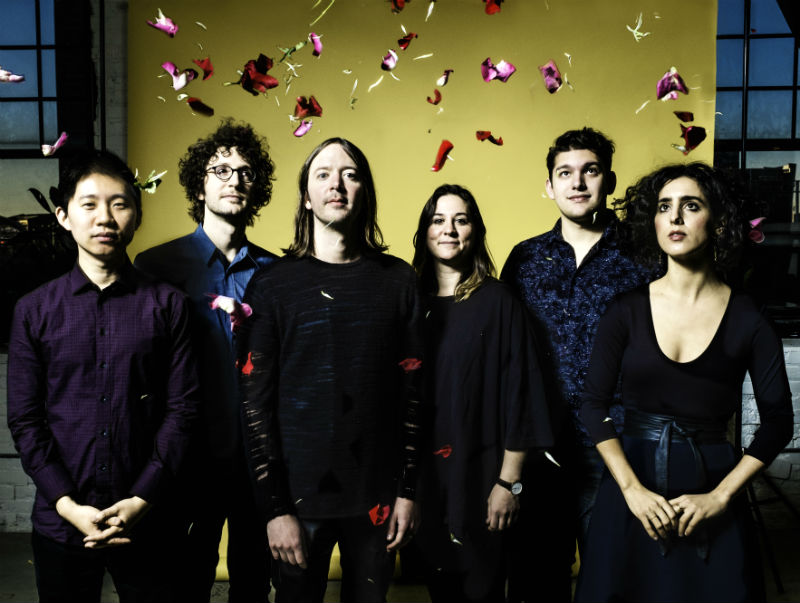
If you aren’t paying attention at the beginning of Andrew Norman’s “Music in Circles” you might miss it. The first note is just so quiet, an almost imperceptible harmonic whispered high in the viola, the kind of airy, insubstantial noise you have to strain to hear.
But once you hear it you’re hooked.
That first lonely pitch is like a slow intake of breath, interrupted after a moment by a stuttering spiccato exhalation that foreshadows the energy that is to come. Slowly the viola is joined by other strings, and patiently the music unfolds and intensifies until, some two and a half minutes in the viola takes off with an up-tempo rhythmic pulse produced by bouncing the bow vertically off the strings, generating a sound that is a blend between being pitched and being a percussive noise.
From here the music grows in volume and intensity as the cello and trumpet play yearning arpeggiated lines, the bass clarinet pitches in with a fluttering falling figure, the violin scratches wildly and the flute shoots jets of air. It’s thrilling. And then it winds down again, just as patiently as the music of the opening developed.
Eventually, the piece closes out with soft, slowly moving echoes of the previous material, pared down until it’s only the viola, again, playing alone, with that same airy harmonic it began with.
“Music in Circles” has always been one of yMusic’s more popular pieces, at least on the classical music side of things, so it’s no wonder that the group chose to program it on last Friday’s performance at Rackham Auditorium.
Fifth Avenue Press celebrates the release of 9 new books on November 10

The Ann Arbor District Library's Fifth Avenue Press celebrates the release of its latest batch of books with a release reception at the downtown branch on Sunday, November 10, at 1 pm.
AADL cardholders can download PDF copies of the books here; print copies for most titles will be on sale at the reception.
To read interviews with the other authors, click on the book titles below:
➥ The Elements: A Love Letter to All Things Everywhere written and illustrated by Hannah Burr
➥ Intersections by Shanelle Boluyt
➥ All That We Encounter by Bethany Grey
➥ Shape Notes by Judy Patterson Wenzel
➥ Fantastic Planet: Modern Crab Adventures written and illustrated by Douglas Bosley
➥ Over in Motown by Debbie Taylor, with illustrations by Keisha Morris
➥ The Dragon Library by James Barbatano, with illustrations by Douglas Bosley
➥ Breaking Through by Johnny Thompson
➥ The Planet We Live On by Shanda Trent
Flash! Bang! A photographic funeral for the 18-year-old dance party's goodbye blowout at The Blind Pig
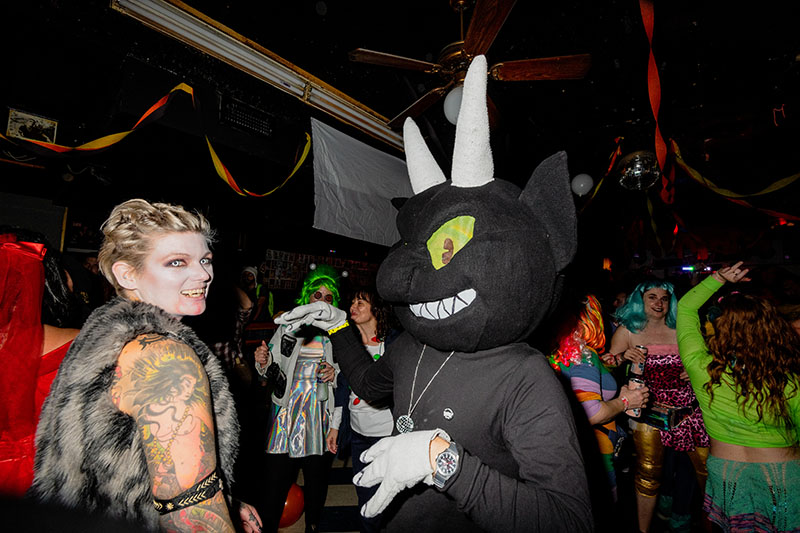
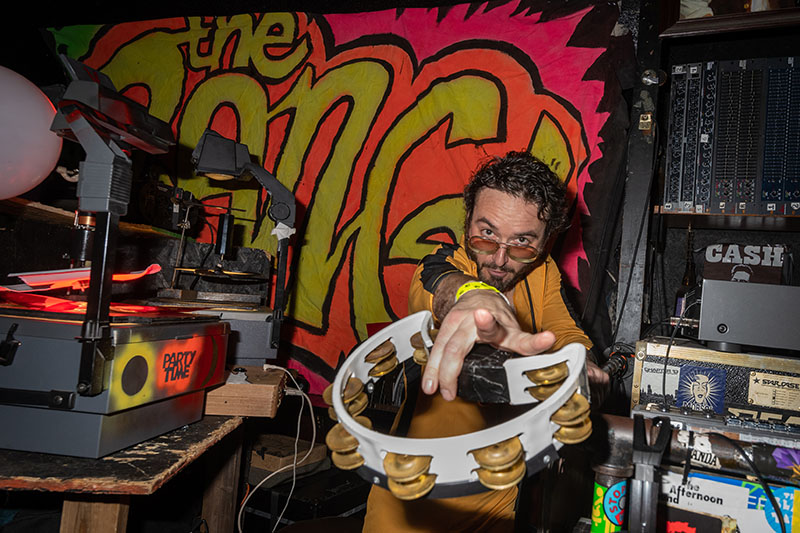
The nearly two-decade-old dance party The Bang! went out with ... wait for it ... a bang on Saturday night at The Blind Pig. Photographer Doug Coombe met his wife at this long-running throwdown and he was there for the final night -- "The Bang! Must Die!" -- to capture the euphoric madness for one last time. (If you're unfamiliar with The Bang!, here's our brief history, "Last Dance.")

In a Silent Way: Don Hicks, owner of Ann Arbor's Blue Llama Jazz Club, won an auction for one of Miles Davis' trumpets
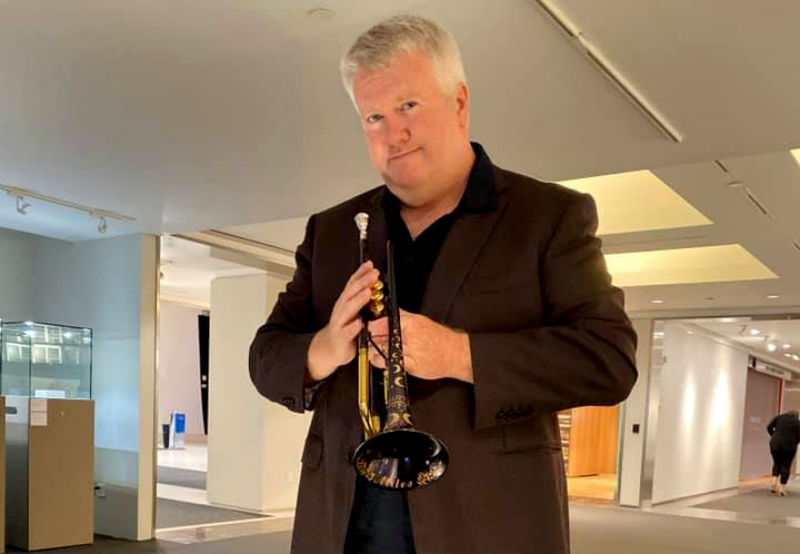
A piece of jazz history has found a permanent home in Ann Arbor.
Don Hicks, owner of the Blue LLama Jazz Club, won a auction on October 29 for one of three trumpets Miles Davis commissioned in 1980 when he was coming off a five-year performing hiatus.
Christie's auction house in New York City put a pre-sale estimate on the instrument’s value between $70,000 and $100,000, but as you can see in the video below, a flurry of bids pushed the cost to $220,000 -- and with the addition of Christie's commission, the final price for the trumpet was $275,000.
Poet and U-M writing instructor Molly Spencer sees the world "as a collection of thresholds" in her new book, "If the house"

Throughout Molly Spencer’s new book of poetry, If the house, each measured word reveals the intensities and scenes of home, time, and solitary experience amidst people and relationships. In a poem titled “How to Love the New House,” there is a line that answers, “Until you ache with it.” Another poem, “As if life can go on as it has,” includes the sentence, “The earth has all these endings,” and the speaker goes on to share, “I am / in a kitchen’s heavy afternoon / light,” almost implying that the sun could indicate a conclusion.
Perhaps most consistently, the passage of seasons prominently delineates time in If the house. Early on, a stanza depicts time’s effects through apples and squash:
Given time, they will ripen,
grow sweet, become something
for you to get by on.
It seems that time offers sufficient sustenance to keep going and also that time keeps independently moving, resulting in byproducts like sweetening. Later, the lines, “It’s December” and then “October and the birds flock / and rise, whole-cloth” appear in different poems. So months also mark time in this collection, along with other indicators, such as, “My body / adds itself again to the unfolding / rooms of time,” and there are “...other Augusts far / from here, but not so far you can’t / reel them back in....” Each moment is clearly fixed to others by virtue of time being linear, but life in this poetry collection’s world still changes and shifts, showing contrasts to previous points in time to which the speaker remains connected.
Joseph Zettelmaier's "Dr. Seward’s Dracula" is a creepy, clever prequel to Bram Stokers' vampire legend
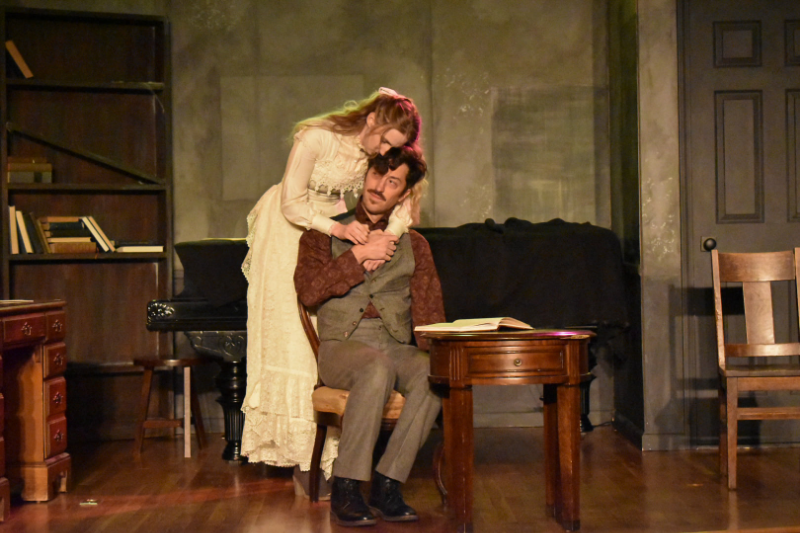
Near the end of Joseph Zettelmaier’s play Dr. Seward’s Dracula -- now being staged by The Penny Seats Theatre Company, at Ann Arbor’s Stone Chalet Inn -- a character observes, “People need their monsters.”
So it seems. For it’s far more comforting and palatable to believe that humans like ourselves simply aren’t capable of committing the very worst acts of violence and depravity.
But we are, of course. And this unnerving truth is precisely what drives Zettelmaier’s unconventional take on the Dracula story.
ARTS AROUND ANN ARBOR
DEFINITELY NOT HOMOGENIZED


