
Comic Duet: Theatre Nova's "Fortune" is a rom-com with expert timing
This has been a chilly, wet, slippery, snowy winter, so it’s a perfect time to warm up with a rom-com—especially with Valentine's Day around the corner.
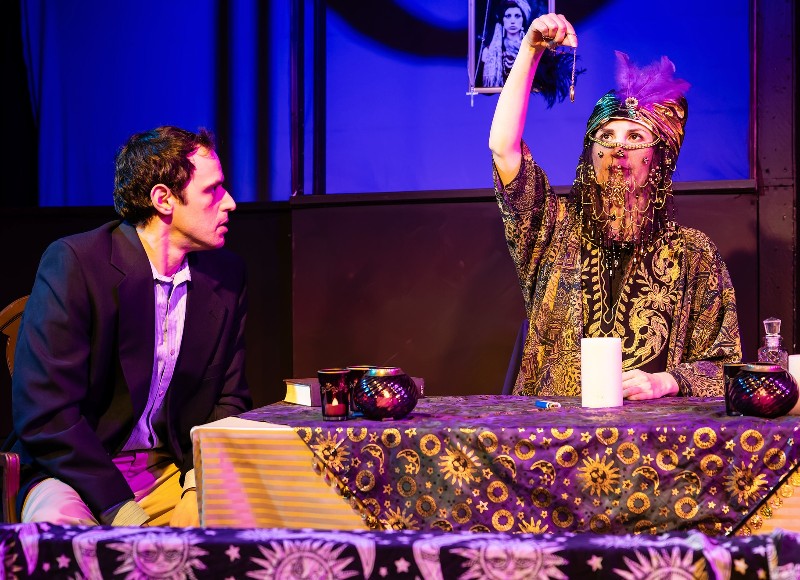
For Theatre Nova's production of Deborah Zoe Laufer’s Fortune, director Carla Milarch brings two talented actors together in a comical duet. It’s a good choice for Nova's tiny, sometimes cramped space. There are some lighting special effects, but most of the fireworks come from the actors who play two lonely people looking for love.
Madame Rosa is a fortune teller, like her mother. It’s a family business and a curse. Unlike other “fortune tellers,” Madame Rosa actually can look into the past and predict the future, but she'd rather be a secretary.
When not being Madame Rosa, she’s a lonely young woman named Maude who is afraid of what she can do and afraid to give up the business and do something about her life.
One day, a desperate young man demands that Madame Rosa read his fortune. He’s an awkward young accountant who has been regularly striking out in his attempts to find love. He wants to know what his future holds and doesn’t want it sugar-coated.
Memorialize and Remember: Grey Rose Grant's folk opera "Little Histories" explores the death ritual

Grey Rose Grant puts all of themself into projects.
Their 2019 folk opera Michigan Trees came out of Grant's experience as a trans-femme person. The 2023 chamber-rock opera The Precipice was based on Grant's poems and songs along with the journals of Karl Ronneberg, their co-founder of Fifth Wall Performing Arts. Even Grant's new work, Little Histories, about a mortician looking back on the life events that made him turn to his profession even as they prepare to host a funeral for a former lover, has its roots in the composer, performer, and librettist's North Carolina childhood.
"Little Histories is deeply connected to personal experience," Grant says. "Back in the day I was surrounded by literary nerds and we went through an autofiction phase which has for sure affected how I want to tell stories within the medium of theater. Every little story told in Little Histories has some truth to it: memories of two of my grandparents' funerals; a memory of witnessing a bird fly into a window in high school; the pet cemetery we had in the woods behind my childhood home. That said, these memories are swirled together, misremembered, and injected with a healthy dose of retold mythologies, the story of the birth of the modern American funeral industry, and more. I enjoy beginning from the personal and moving outward from there."
Fifth Wall Performing Arts' production of Little Histories runs January 26-28 at Canterbury House in Ann Arbor, and I asked Grant, a 2016 graduate from the University of Michigan who currently works at Ypsilanti's Riverside Arts Center, about their latest DIY folk opera.
AADL 2023 STAFF PICKS: HOMEPAGE

People who work at the Ann Arbor District Library love to give recommendations.
Whether in person at one of the five branches, in the News and Reviews section of AADL's website, or right here at Pulp, highlighting our favorite books, films, TV shows, video games, websites, adventures, and more is just part of the gig.
Like you, we are passionate enjoyers of media and experiences.
This is our seventh year compiling Ann Arbor District Library staff picks—and with more than 40,000 words spread out over four posts, it is the longest edition yet.
To reiterate: We. Love. To. Give. Recommendations.
Here are the creative works and experiences we discovered in 2023 that moved us enough to share them with you. (Not that you needed to twist our arms.)
➥ AADL 2023 Staff Picks: Words
➥ AADL 2023 Staff Picks: Screens
➥ AADL 2023 Staff Picks: Audio
➥ AADL 2023 Staff Picks: Pulp Life
A Fair of Affairs: Ann Arbor Civic Theatre's "The Real Thing" is all about the dangerous game of love
A typical Tom Stoppard play features a whole lot of words just to get to a basic point. It can be intellectually stimulating—or a wee bit draggy if you're looking for more action on stage.
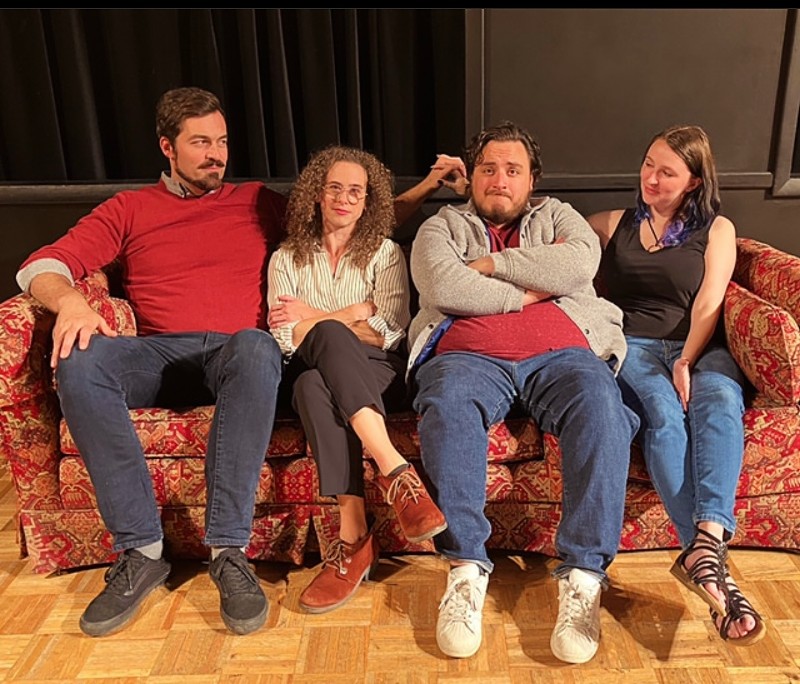
But the high-energy Ann Arbor Civic Theatre production of Stoppard's The Real Thing that opened last Friday to a sold-out crowd flows at an excellent pace thanks to director David Widmayer and grips your attention throughout.
The play is set in 1980s London and focuses on two couples. Henry (Chris Grimm) is a playwright married to Charlotte (Kara Williams), an actress who frequently stars in Henry’s shows, including his current piece, House of Cards. They are good friends with Annie (Sara Long) and her husband Max (Manny Abascal Jr.), who is also an actor and starring in House of Cards with Charlotte.
Deck Halls the Halls With Boughs of Corn: Encore Theatre's "White Christmas" hits all the right nostalgic spots
As a starting point, let’s just agree: White Christmas is pure, nostalgic corn.
But ever since I was a kid, watching the 1954 Bing Crosby movie with my musical-loving mom, it’s always gotten me right in the feels. The world-wise romantic leads who initially dislike each other? The outwardly gruff but paternal General who’s deeply beloved by his men? The snow that refuses to fall in Vermont until conflicts are resolved, and love and goodness prevail?
Like it’s on the cob, ready to be shucked, people.
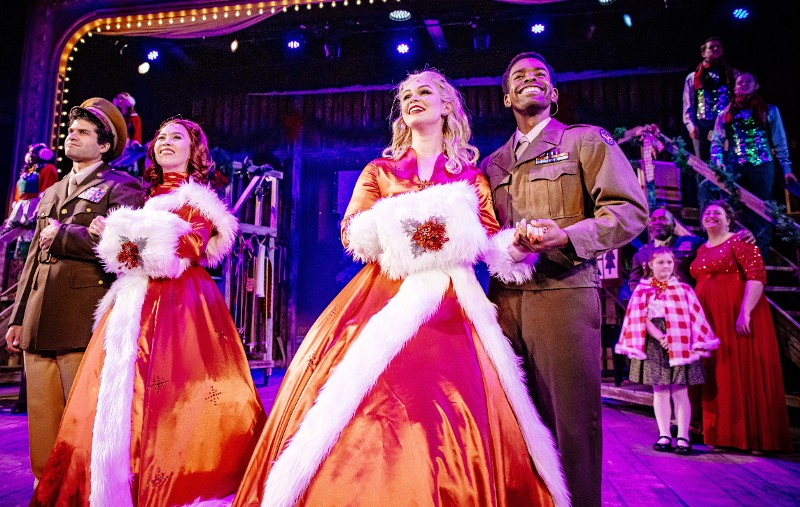
But recognizing how a story blatantly pulls on your heartstrings sometimes does little to defuse its impact, which is why I was all too happy to check out the stage musical adaptation of White Christmas at Dexter’s Encore Theatre.
Much Ado: U-M Theatre's "Imogen Says Nothing" bears bizarre and haunting moments
U-M theater professor Malcolm Tulip has long established a reputation for bringing challenging, provocative productions to local stages, going back to his days as a director (and performer) at the sadly defunct Performance Network Theatre.
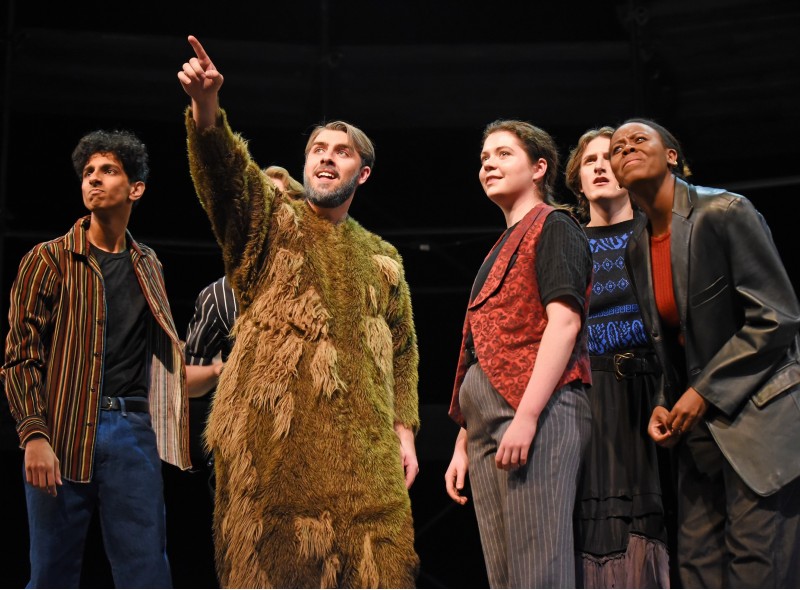
So it was no surprise to find Tulip at the helm of the U-M theater department’s strange, darkly haunting production of Aditi Brennan Kapil’s Imogen Says Nothing, mounted at the Power Center this past weekend. Inspired by a character, Imogen, who has no lines, but is nonetheless mentioned in the first folio edition of Shakespeare’s Much Ado About Nothing, the play imagines a woman who fights to perform on stage in Shakespeare’s time, when only men played theatrical roles (by law!), and campaigns to appear in the first written version of the play, too.
Plus, there are bears.
Imogen is a former bear (!) who has escaped the bear-baiting arena next to the Globe Theatre, which hearkens back to one of Shakespeare’s most famous stage directions, in The Winter’s Tale: “Exit, pursued by a bear.”
While enmeshed with a troupe of actors, Imogen confronts her former peers, and the line that encapsulates the play, “It is a lonesome thing to be absent,” further expands its meaning.
New Day Rising: Penny Seats' "Sunrise Coven" tackles the opioid epidemic and second chances
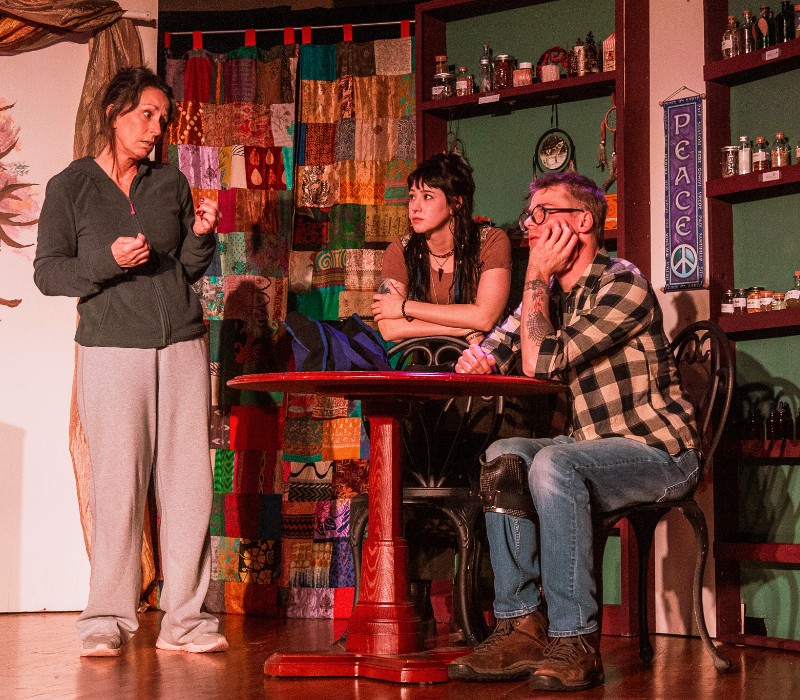
It’s no secret the United States has a drug problem, and painkillers are at the top of the list. The Penny Seats Theatre Company’s Sunrise Coven tackles that conversation and then some.
Written by Brendan Bourque-Sheil, the show takes place in Buckstop, Texas, a small town where everyone knows everyone else and all their business. We meet Hallie Heaton (Jeannine Thompson), a diabetic nurse practitioner who has wound up in the hospital because she overdosed on Oxycodone. The doctor taking care of her is Annie (Inchai Reed), who reveals she has based her entire career on Hallie and sees her as an idol.
Hallie gets the unfortunate news that due to her OD, she has lost her nursing license. On top of that, her eyesight is starting to go bad and she's having visions she can’t explain.
The Folds of Space: EMU’s "A Wrinkle in Time" was a quick-paced journey for the whole family
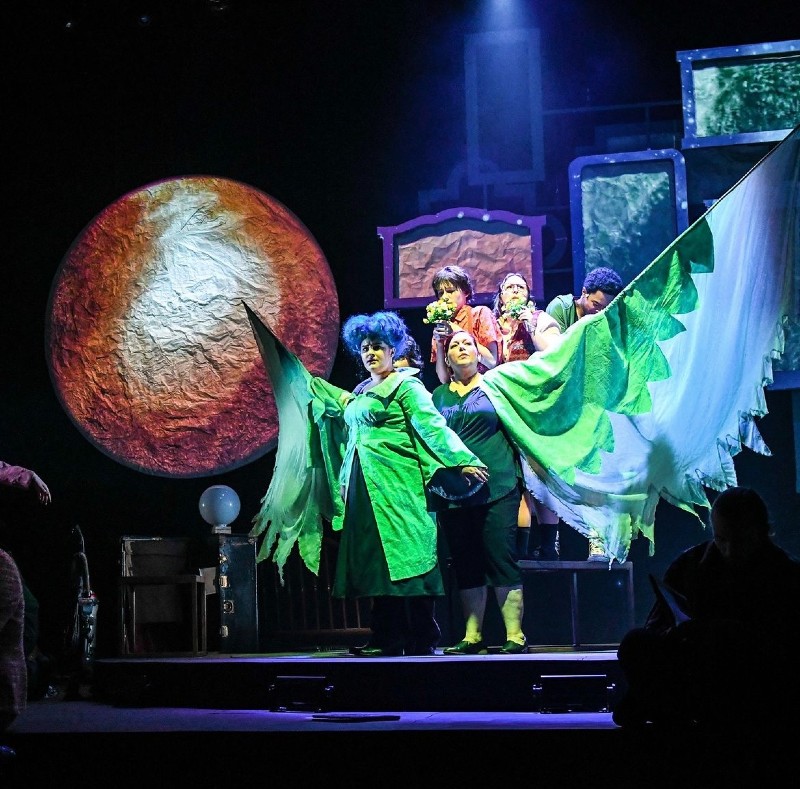
Audiences at Eastern Michigan University’s Liberty Theatre traveled through time and hopped across realms over the weekend.
Tracy Young’s adaptation of A Wrinkle in Time, based on the book by Madeleine L’Engle, was a fast-paced family adventure that follows Meg Murry (Annabelle Rickert), an outcast at school who has trouble fitting in and making friends. The only people she’s close to are her mom (Amanda Bates) and her spunky younger brother, Charles Wallace (Josi Middaugh). Meg’s father (Jonathan Bias) has been missing for quite some time, and she’s still determined to figure out what happened to him.
One day, Charles Wallace convinces Meg they should check out the haunted house at the bottom of the hill. On the way they run into Calvin (Chandler Graham), who joins the siblings. At the house, they meet the eccentric Mrs. Whatsit (Brookelyn Hannah), Mrs. Who (Maura Doyle) who only talks in quotes, and the ominous voice of Mrs. Which (Laney Bass) whose presence is everywhere but isn’t seen by the kids. Turns out they are magical beings that can travel through space and time via a tesseract, a form of traveling by folding the fabric of space and time.
"Things Hidden Since the Foundation of the World" Explores the Challenges of Information Overload and Ubiquity

When you Google the name of the Javaad Alipoor Company’s theatrical production Things Hidden Since the Foundation of the World, you learn this grandiose mouthful of a title was originally used by French philosopher René Girard for a book he wrote.
To learn a little more, you might read a brief overview of Girard’s mimetic theory, which posits that humans don’t know what to want, so we look to others and imitate their desires.
Wait. You came here for a review of Alipoor’s show of that name presented by UMS this week at the University of Michigan’s Arthur Miller Theatre, right? Sorry!
Yet this classic Digital Age digression demonstrates precisely what’s at the heart of Alipoor’s innovative 90-minute show, which was written with Chris Thorpe. Though we know, and are constantly reminded, that almost any information we could possibly want is now at our internet-addicted fingertips. In response, we go online like a reflex with the idea that “facts” provide us with understanding, or that the two things are somehow synonymous, is a dangerous illusion.
Using the unsolved, brutal 1992 murder of Iranian pop star (and refugee) Fereydoun Farrokhzad—who fled Iran during the Islamic Revolution in 1979—as the show’s base of operations, Alipoor integrates video and an onstage, fictional true crime podcast (as well as some nifty theatrical sleight of hand) to explore the case, and more broadly, the link between contemporary technology and politics.
My Deer Heart: Jeff Daniels' "Escanaba in Love" tracks love and laughter at an Upper Peninsula hunting camp
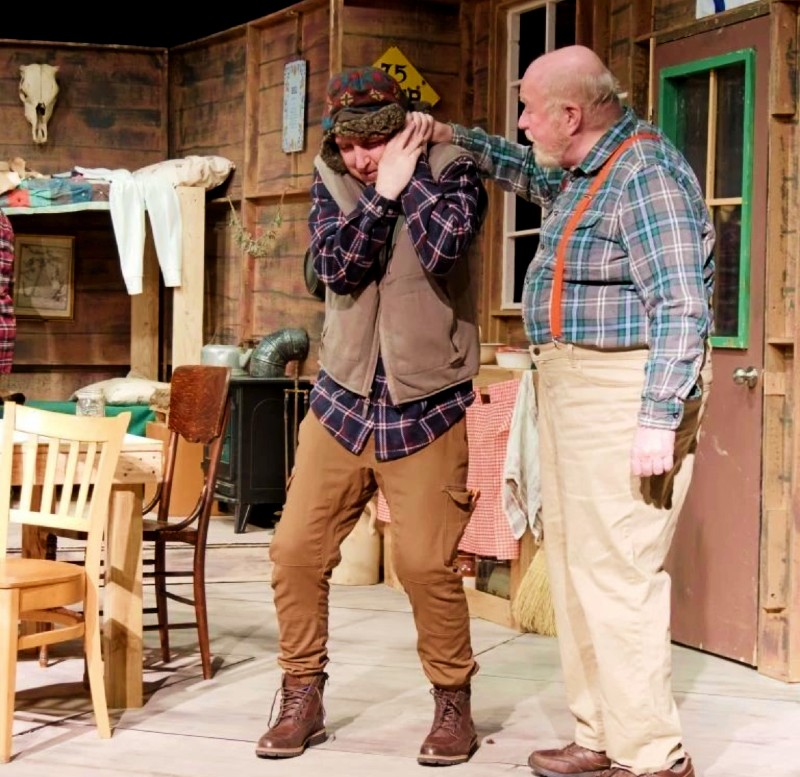
Michiganders know the opening day of deer season is essentially a holiday for many folks, and that's definitely the case in Jeff Daniels’ Escanaba in Love, which PTD Productions is staging at the Riverside Art Center in Ypsilanti.
In this prequel to Daniels' hit show Escanaba in Da Moonlight, the audience is transported to the small Western Upper Peninsula town where the infamous Soady Deer Camp resides. It's 1944 and multiple generations of Soady men have been coming to this cabin in the woods to hunt.
Family patriarch Alphonse Soady (Larry Rusinsky) is convinced he shot the biggest buck to ever walk the woods even as Albert Soady Sr. (Mark Bernstein) is certain Alphonse is losing his mind.
In comes "Salty" Jim Negamanee (Gary Lehman), who walks with a gimp due to a supposed boat accident and an alcohol problem. They all talk about the excitement of opening day and who will get the big buck this year.
ARTS AROUND ANN ARBOR
MAKE IT A REGULAR PART OF YOUR WEEK


