
Mary Gaitskill Reflects on Her Latest Works and Extensive Career During U-M's Zell Visiting Writers Series Event

According to writer and University of Michigan alumna Mary Gaitskill, almost nothing is unbelievable and people are weird. Her work often reflects this notion with morally ambiguous characters, a gritty detailing of misconduct, and a complete rejection of clean-cut, black-and-white narratives.
Quin, the protagonist of her acclaimed 2019 novella, This Is Pleasure, is one of her weirdest characters. In Quin's mind, his flirtatious workplace actions weren’t all that bad. When women began coming forward about feeling violated, he became caught off guard.
“There was a cultural landscape for a while at least where he existed—I’m not saying it would be acceptable to everybody,” Gaitskill explained about Quin. “I’m sure he did offend some people, but because of his position, I think he didn’t realize he was offending people.”
Gaitskill shared her latest works and extensive literary experience during a March 21 reading and Q&A at the University of Michigan Museum of Art’s Helmut Stern Auditorium. Hosted by the Zell Visiting Writers Series, an annual showcase sponsored by The Helen Zell Writers’ Program, it brings fiction writers and poets to U-M’s campus to host public readings and lectures.
Initially published in The New Yorker, This Is Pleasure dominated literary circles due to its unlikely telling of a story of the “#MeToo” movement, a social campaign aimed at exposing people, especially those in positions of authority, involved in sexual misconduct.
It offers a complex narrative about two characters, Quin and Margot, who find themselves entwined with the tendrils of a public sexual misconduct scandal. Quin—a husband, father, and New York book editor—loses his career once young women start coming forward about his wrongdoings. Margot is Quin’s former co-worker, and after rejecting his sexual advances early in their working relationship, the two became close friends in the industry. When Quin’s name hits the front pages of tabloids, the two navigate the complex intersections of power, guilt, and manipulation.
Love, Grief, Class, and Cancer: A.H. Kim's “Relative Strangers" reimagines a Jane Austen plot set in modern-day California
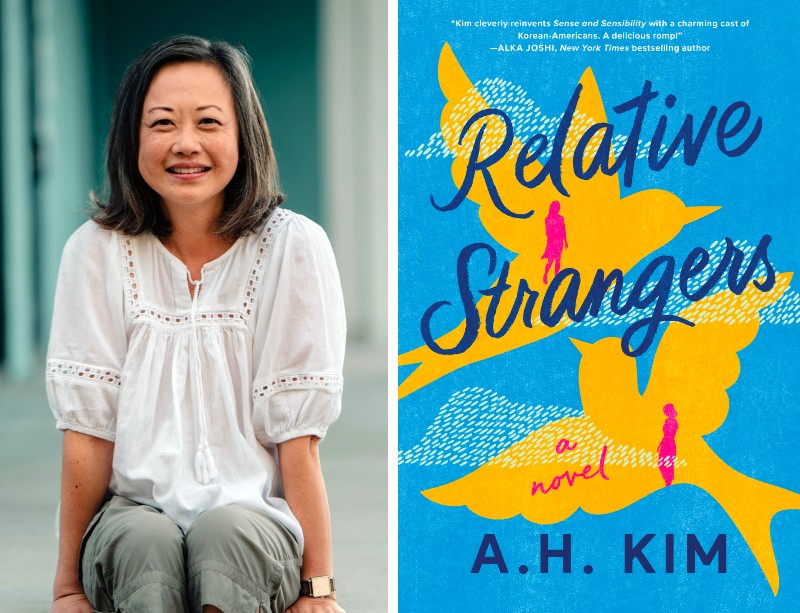
The details of who knows whom, and what happened in their pasts, result in drama in Ann Arbor author A.H. Kim’s retelling of Sense and Sensibility through her new novel, Relative Strangers, set in modern-day California.
Kim was an attorney and worked at a Fortune 200 company before retiring to write full-time. She raised her family in San Francisco, is a cancer survivor, and now lives in Ann Arbor with her husband. Kim will be in conversation with Camille Pagán at Literati Bookstore on Tuesday, April 2, at 6:30 pm.
The parallels to Jane Austen’s novel are revealed in the premise of the book.
Ypsilanti Author Darcie Wilde Continues Character Rosalind Thorne’s Detective Work in the Cozy Mystery, “The Secret of the Lady’s Maid”
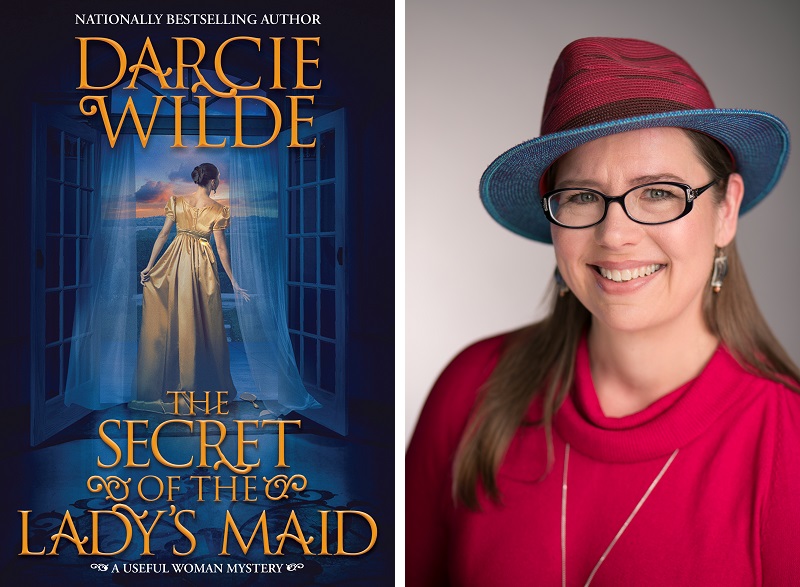
Rosalind Thorne launches an investigation when Marianna Levitton hires her to find out the cause of her poisoning in the cozy mystery called The Secret of the Lady’s Maid by Darcie Wilde. As the plot unfolds, the attempted murders by arsenic are just the start of problems that expand to include jewel theft and murders.
This book is the second in the series called “The Useful Woman Mysteries,” which begins with The Secret of the Lost Pearls and features Rosalind, who's the main character in other novels by Wilde.
Wilde is one of several pseudonyms for University of Michigan alum and Ypsilanti-based author Sarah Zettel. Her period novels take place in Regency London, where the haut ton socialize and those in domestic service wait on them.
Rosalind possesses a keen eye for details that do not line up. Through observing people and delicately asking the right questions, she pieces together the story. As she is talking with Cate, a member of the Levitton family that Rosalind is scrutinizing, Rosalind displays her cleverness and discretion when she asserts:
U-M law professor Barbara McQuade fights against disinformation in her new book

When Barbara McQuade, a University of Michigan law professor and MSNBC legal analyst, prosecuted a doctor who “cured” cancer in patients who didn’t have cancer, some victims refused to believe they’d been duped. They had trusted their doctor, after all, and how could they have been so wrong?
In her new book, Attack From Within: How Disinformation Is Sabotaging America, which she will discuss at the Ann Arbor District Library on March 7, McQuade uses many examples from history, here and abroad, to show us just how disinformation works.
In her comprehensive page-turner, McQuade also pulls theories from top political scientists, stories from FBI agents and other experts, and even Greek mythology, weaving them into a coherent argument that just may save our democracy.
Poet Zilka Joseph imparts memories, history, and culture of the Bene Israel people by way of food in “Sweet Malida”
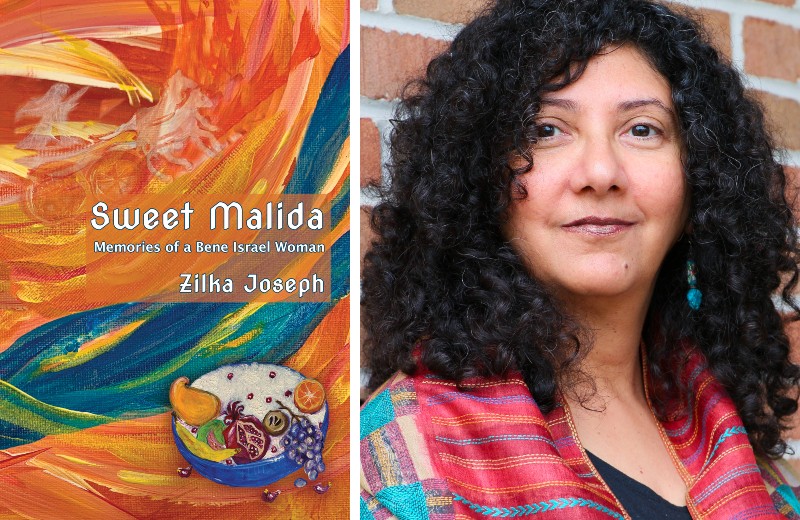
“From tumbled sands and shattered bark / blurred shadows dragged us,” writes Zilka Joseph in her new poetry collection, Sweet Malida: Memories of a Bene Israel Woman.
These poems are immersed in the history, customs, and food of the Bene Israel people. The Ann Arbor poet shares about their shipwreck on the shores of India, worship of the prophet Elijah, and subsequent dispersing across the world. While Joseph imparts facts about the culture and community, she also makes the poems personal with her memories.
This cultural and familial history informs Joseph’s poems, such as “Leaf Boat,” which is a longer poem that receives its own section of the book. Joseph describes “my body a leaf boat / lamp floated on water” in the context of the heritage of her ancestors, grandmother, parents, and herself who moved from place to place. Even her birth was during unsettled weather: “I was born Thursday in monsoon rain / night time East coast time / in Bombay a baby opens her eyes.” Water, especially oceans, flows through the lines, and “in my dream / the whales are singing.”
Joseph focuses less on what is lost, though she does pay tribute to her parents, and focuses more on the richness that the traditions and foods of the Bene Israel pass along. One such food is “draksha-cha sharbath. Sherbet of raisins” for Shabbath, which Joseph writes about replicating on her own after moving to the United States. Earlier, she had prepared it with her grandmother and mother. As she writes in one of the short essays or prose poems that are interspersed throughout the book, making this recipe is like time traveling for Joseph:
U-M Writer-in-Residence Caroline Harper New's poetry book “A History of Half-Birds" unfolds time and explores human-animal interplay
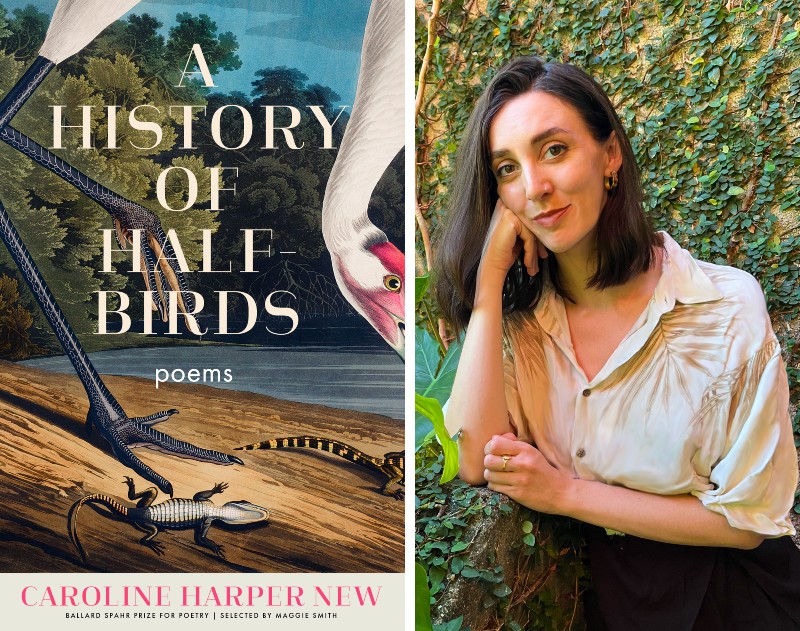
“Control is a delicate science,” writes Caroline Harper New in her poetry collection, A History of Half-Birds. This book won the 2023 Ballard Spahr Prize for Poetry as selected by Maggie Smith.
New is a Writer-in-Residence at the University of Michigan and a U-M alumna with an MFA in Writing. She will read and be in conversation with poets Abigail McFee and Maia Elsner on Thursday, February 15, at 6:30 p.m. at Literati Bookstore.
A History of Half-Birds examines destruction from both natural events and human actions. The consequence is that a person’s life—or an animal’s life—is no longer the same. Since “We study the past to know the future,” there is no forward movement in these poems without probing what happened previously, whether that is Amelia Earhart’s disappearance or a reimagined Wizard of Oz in which Dorothy repeats “there’s no place like home anymore” amidst alligators.
This poetic investigation finds that pain and love are intertwined during these trials. A songbird that appears dead awaits its burial, but when the poet is ready to place it in a newly dug grave, the bird has vanished. This different type of loss brings new emotions. The poet implores that “I need you / to know I would have kept you, and loved you / most, had you never escaped my hands.” The past, present, and future are tinged with wondering what could have been if details had been altered.
The Gulf Coast storms raging throughout this collection are out of control, but they do not only consist of fury because “our lemon trees bloomed most brilliantly post-hurricane.” Specks of light also emerge. All people can do is name what they see, as the poem “Garden of Eve” suggests:
U-M anthropologist Ruth Behar sails “Across So Many Seas” through the stories of four 12-year-old girls

Spanning hundreds of years and four countries, Ruth Behar’s new middle grade novel, Across So Many Seas, features four 12-year-old girls, each facing their own momentous challenge.
Behar, a University of Michigan professor, will be in conversation with fellow professor Devi Mays at Literati Bookstore on Tuesday, February 13, at 6:30 pm.
The common theme among the girls’ challenges is exile. They are part of the same Jewish family, and different generations of their relatives find themselves traveling across different oceans to a new home. Benvenida journeys with her family from Spain to Naples and then Turkey in 1492 owing to the Spanish Inquisition. Reina is abruptly forced out of Turkey to forge a new life on her own in Cuba in 1923. Alegra escapes Fidel Castro’s regime with her family and relocates to the United States in 1961. Lastly, Paloma has the chance to learn about her history on a trip to Spain from her home in Miami in 2003. In fact, Paloma is the daughter of Alegra and granddaughter of Reina.
Each move causes pain for the characters, and each new country marks a new chapter in the long history of the family. As Benvenida takes a ship from Spain to Naples, she reflects:
Zingerman’s “Celebrate Every Day” cookbook offers recipes that correspond with the seasons and holidays

Picking just one recipe to make first from Zingerman’s Bakehouse Celebrate Every Day: A Year’s Worth of Favorite Recipes for Festive Occasions, Big and Small is a difficult decision.
Would it be something savory, like “The Works Grilled Cheese Sandwich” and “Tomato De-Vine Soup?”
Or would it be something sweet, such as the “Maize and Blue Cobbler” or “Not-Just-Chocolate Babka?”
The 75-plus recipes to choose from emphasize the seasons and holidays so there is a dish or dessert for every time of year.
The inspiration for the book stems not only from the seasons but also from COVID-19. For authors Amy Emberling, Lindsay-Jean Hard, Lee Vedder, and Corynn Coscia, the seasons include not only the big things but also the little things. One reason for this approach was that the pandemic changed many people’s outlooks and the ways they spend time. Despite the modifications to day-to-day life, food remained central—and even grew in importance—when the world stayed at home in 2020. As Emberling writes in the book’s introduction:
A Search for Meaning: Nishanth Injam's new short-story collection hopes for "The Best Possible Experience"
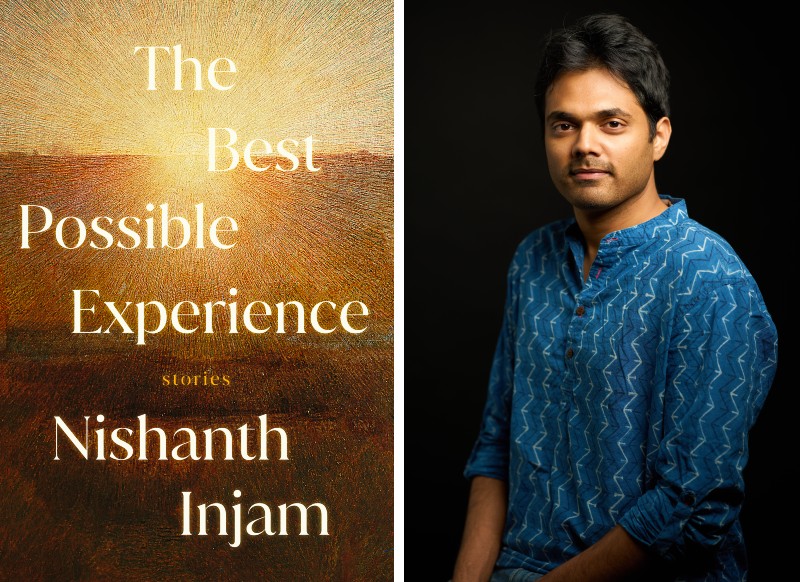
What is “the best possible experience?” Is it subjective or objective? How does one find it? Does it fulfill or disappoint?
Nishanth Injam’s new short story collection, The Best Possible Experience, seeks to find out whether the best possible experience is everything that it is chalked up to be. The University of Michigan MFA alum’s characters endure losses, yet they nevertheless hold on to their longings. Those longings may or may not be their own, and sometimes their actions mask a deeper desire.
The characters in The Best Possible Experience live in or are from India. They seem to be at odds with something. Here is not there. A significant other or close relative is not present. Despite trying hard, “It wasn’t supposed to have been this way,” says Rafi, who lost his wife, in “The Sea.”
The characters who have left India struggle with being neither at home in the United States nor having a place that feels like their own in India: “Once you go, there’s nowhere to return.” When Sita travels from the U.S. to her village in India to visit her grandfather, Thatha, in “Summers of Waiting,” she reflects on how much time she has there and the way that time passes:
Who Has What: Connections Between College Students and a Visiting Professor Lead to Scandals in Kiley Reid’s New Novel, “Come and Get It”

Kiley Reid’s sophomore novel, Come and Get It, centers on the lives of college students, mostly juniors, seniors, and one super senior, plus a visiting professor. What starts out as a job for a resident assistant and a place to live for the three students in the suite next door gradually and unexpectedly escalates into several related scandals.
Reid, an assistant professor at the University of Michigan, is debuting Come and Get It during a January 30 event at the Ann Arbor District Library’s downtown location. Hosted by AADL and Literati Bookstore, it features Reid in conversation with Austin Channing Brown and doubles as the publication date of her new book.
With this book following her first novel, Such a Fun Age, which was the 2023 Washtenaw Read book, Reid reinforces her expertise in writing plot-driven adult fiction full of sharp insights into characters, their choices, race, materialism, and the very human emotion of humiliation. Reid’s situational humor in Come and Get It also brings laugh-out-loud moments via student pranks and misunderstandings that are both cringey and hilarious.
At the start of Come and Get It, Millie Cousins is returning to the dorms as a resident assistant (RA) following her year off to care for her mother Glory. This time she has a goal, which is saving up to buy a house in her place of choice, Fayetteville, where she is finishing school at the University of Arkansas. This setting has resonance for Reid because she lived there for a year before earning her Master of Fine Arts.
“Fayetteville is an incredible place and one of my favorite towns,” said Reid. “It’s beautiful and hilly. There’s an ease to living there and there are four true seasons. None of my characters are from Fayetteville, and they’ve all come there for very different reasons. I was interested in what would bring them there and what they were expecting to get out of it.” In Come and Get It, what the characters end up getting out of it is not what they expect.
ARTS AROUND ANN ARBOR
DRAINED THROUGH A SCREEN FOR YOUR CONVENIENCE


