Things to See: Pulp Art Exhibit Roundup for August
While we're entering the final stretch of summer, there’s still time to catch several vibrant and innovative art exhibits this month in Washtenaw County. Check out this comprehensive list of exhibits featured at local galleries throughout August.
The (m)Organic Process: Inhale. Exhale. Art.
August 2-13
CultureVerse, Ann Arbor
The (m)Organic Process: Inhale. Exhale. Art. spotlights the creative process and original work of local artist Morgan Burgard. Visitors will experience the process of making art, what it means to Burgard, and what it means to them through a physical exhibit and a virtual experience.
Portraits of Feminism in Japan
Through August 4
Lane Hall Exhibit Space, the University of Michigan’s Institute on Research for Women and Gender, Ann Arbor
The exhibit features original portraits of feminists who have shaped the landscape of women's rights and gender rights in Japan and beyond. Portraits of Feminism in Japan features portraits and accompanying texts from nine contemporary artists in Japan and the U.S. that challenge simplistic understandings of feminism.
The artists also highlight a diversity of experiences, needs, and activism within Japan and cover the history of Japanese studies at the University of Michigan in conjunction with the Center for Japanese Studies’ 75th anniversary.
Featured artists include Elaine Cromie, JenClare B. Gawaran, Takatoshi Hayashi, ivokuma (いぼくま), Nami Kaneko (金子奈美), Kang Jungsook, Lisa Taka Miyagi, Nancy Nishihira (西平・ナンシー), and Shigeki Shibata (柴田滋紀).
Gutman Gallery’s “Every Body” Exhibition Offers an Engaging Exploration of Diversity
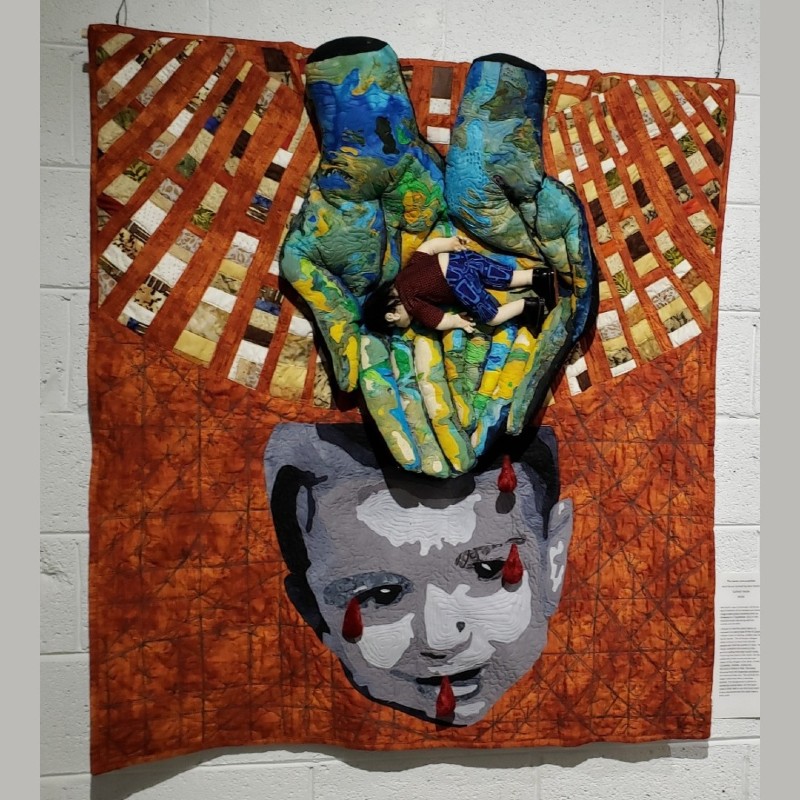
The Every Body exhibition currently on display at Ann Arbor's Gutman Gallery showcases both the variety of the human form and the artwork that honors it.
Running through July 1, the all-media show features 34 works by 27 artists in the Guild of Artists and Artisans’ storefront space. Built on a theme of “figurative artwork and body diversity,” the exhibit succeeds in offering an engaging mix of media, artistic styles, and subject matter.
A number of the works in the exhibition feature artist statements, often with compelling stories that provide depth. For example, April Shipp’s mixed-media piece The water returned Him is one of the more visually striking pieces in the exhibit, yet knowing the background of the global refugee crises and the story of one particular child who inspired it. Likewise, Jensen Ellington’s My Piece of Eden creatively combines fabric, tree limbs, and thread to connect the Biblical story of Adam’s rib to his own experience as a transgender man. Other pieces stand on their own, such as E. Ingrid Tietz’s elegant Porcelain Muses V which lets her subjects speak to each viewer individually.
Any visitor to the exhibit is likely to come away with a renewed appreciation of the diversity of the human form as well as of the artists and artworks that celebrate it. Noted local artist Nora Venturelli juried the exhibition, and she agreed to answer a few questions about it:
Capturing the Cosmos: Jason Guenzel photographs the beauty of space from Earth
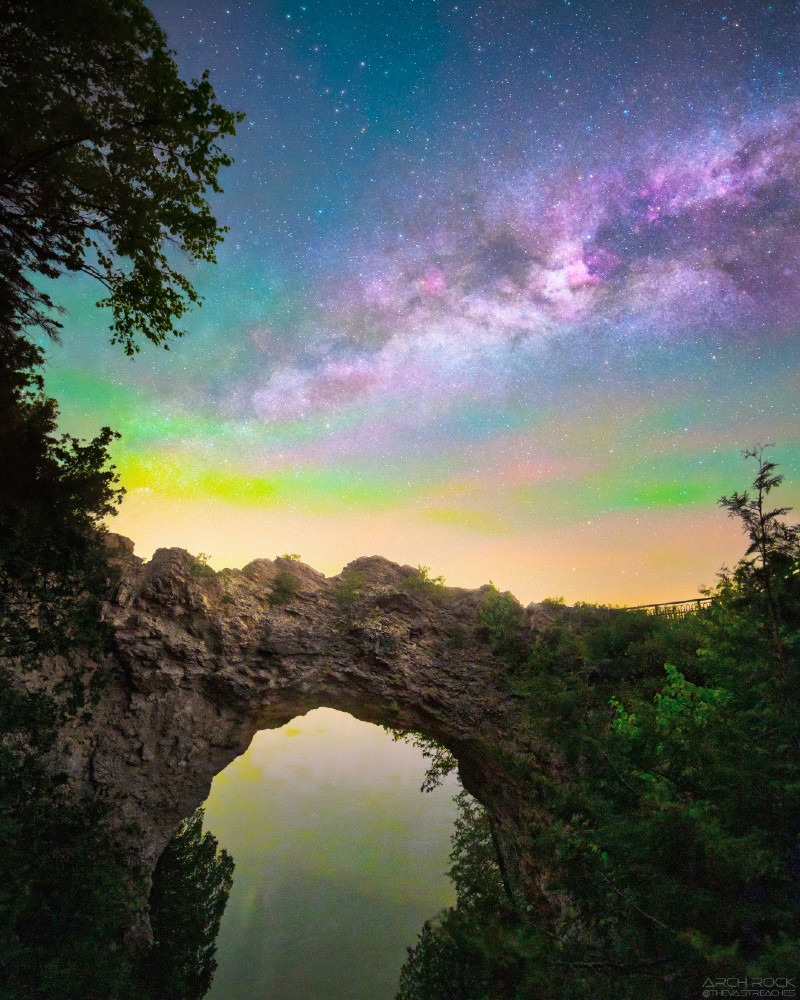
Jason Guenzel has a passion for exploring the cosmos with his camera.
The Michigan-based astrophotographer will appear at the Ann Arbor District Library's Downtown location at 7 pm on June 29 to discuss his love of astrophotography. Guenzel will talk about his journey to the stars, the equipment he uses, and how you can get started in this discipline, which mixes science and art. He'll also present many of his fascinating photos of the cosmos, explaining the specialized techniques he used to capture these breathtaking images.
I spoke with Guenzel ahead of his AADL appearance.
Stamps Gallery launches its second annual "Envision" exhibition, which highlights Michigan-based contemporary artists
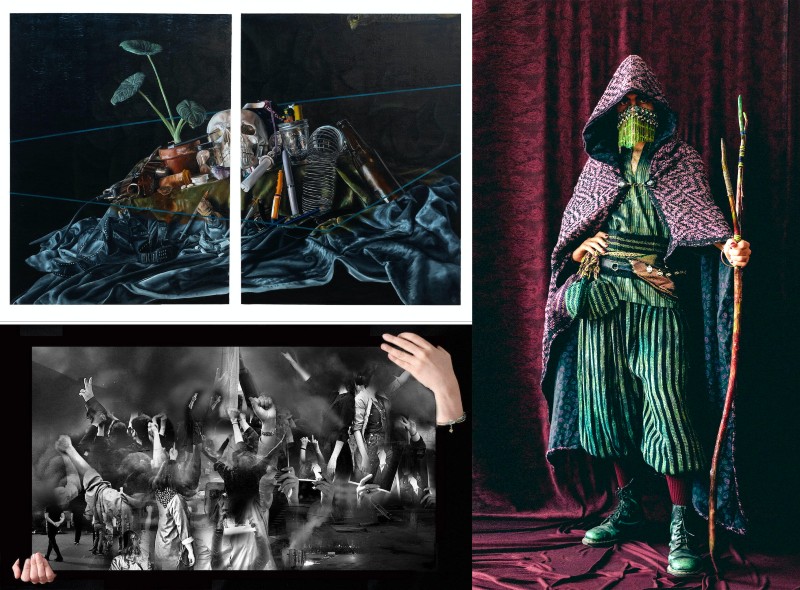
➥ Bakpak Durden, Double Crown of the Distant One, 2022, Khēmia Series. Oil and archival ink on wood panel, 48” x 72” Diptych. Image courtesy the artist.
➥ Levon Kafafian, The Summoner, Hyürabed, 2020. Handwoven cotton, rayon, silk, wool, dye, found fabrics, beads, leather, metal, and wood, 5’7” x 20” x 10.” Image courtesy the artist.
➥ Parisa Ghaderi, For Dancing in the Streets, 2023. Video installation. Image courtesy the artist.
The University of Michigan's Stamps Gallery recently opened its second annual exhibit Envision: The Michigan Artist Initiative 2023, featuring works by contemporary artists living and working in the state.
But the finalist for the $5,000 grand prize won't be announced until June 29 at an awards ceremony.
Parisa Ghaderi, Levon Kafafian, and Bakpak Durden are the 2023 Envision finalists and you can see their multimedia pieces on display through July 29. All three artists will make individual appearances at Stamps in July to discuss their work.
You can learn more about the artists and watch four short videos documenting the Envision: The Michigan Artist Initiative 2023 below:
U-M's North Campus Research Complex galleries debut three new exhibitions
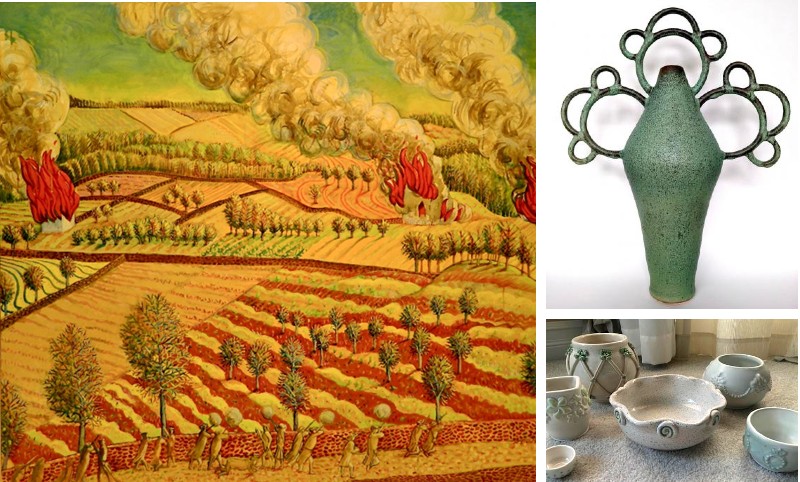
The University of Michigan's North Campus Research Complex (NCRC) is a place for scientists and businesses to develop ideas and projects that can affect real-world change.
The NCRC is also the home of two low-key galleries that run regular exhibitions featuring artists with connections to Michigan (the state and/or the university).
On June 15, 4-7 pm, the NCRC will host a reception for three new exhibits running in the Rotunda and Connection galleries through August 11:
➥ Matthew Zivich, Americana
➥ Cristina Joya, Something Holy
➥ Julianne Orlyk Walsh, Chronicle
Read more about the artists and their works below:
Watch Frederick Ebenezer Okai’s massive sculpture "When the Gods Speak, Heaven Listens" journey from Ghana to Ann Arbor
The We Write To You About Africa exhibition at the University of Michigan Museum of Art (UMMA) isn't really an exhibition in the traditional sense.
It launched in 2021, both online and in person, and is scheduled to run indefinitely because rather than being a limited-time display of UMMA's art plus borrowed pieces, it's actually a reinstallation of the Robert and Lillian Montalto Bohlen Gallery of African art with the connected A. Alfred Taubman Gallery II space. The combined rooms double the amount of space the museum can use to highlight art drawn from collections across the U-M campus as well as new additions to UMMA.
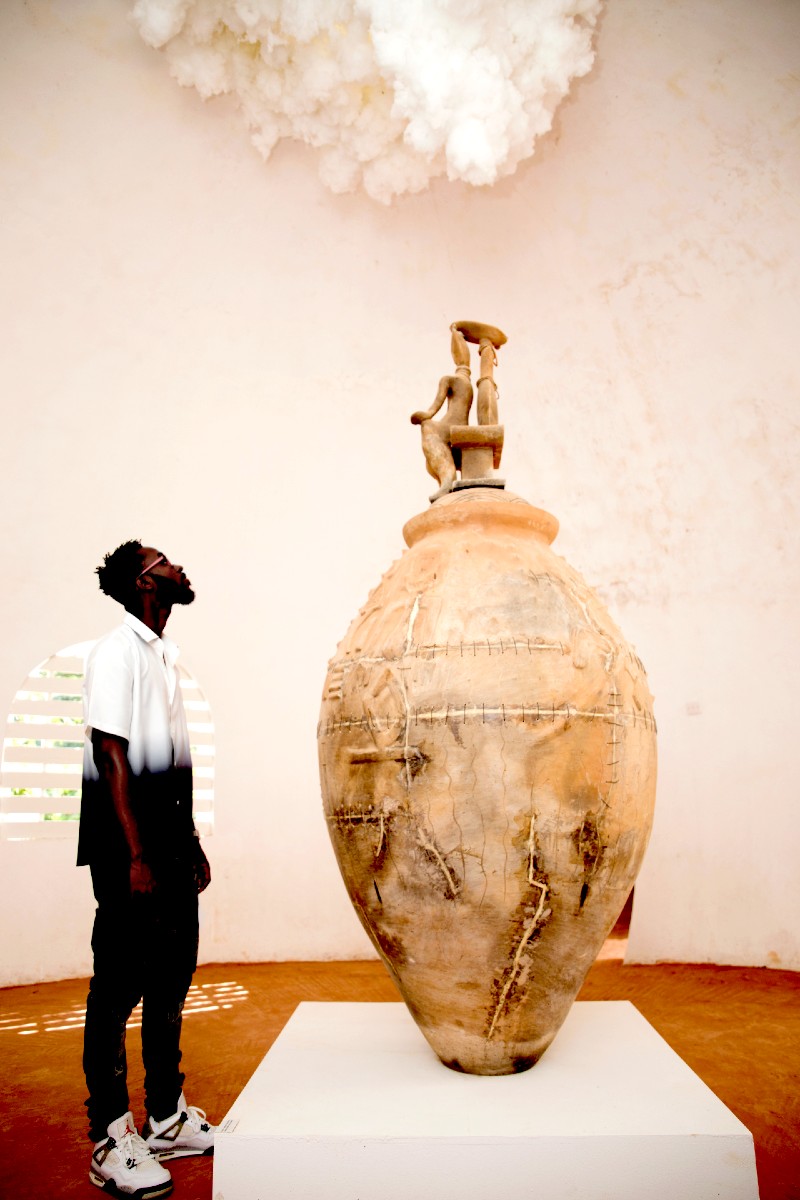
The latest work to join We Write To You About Africa is Frederick Ebenezer Okai’s When the Gods Speak, Heaven Listens, a nearly 15-foot-tall sculpture by the Ghanian artist that comes in three parts: a vaselike clay body decorated with various patterns, topped by a ceramic depiction of two humans, with clouds hovering over the other sections.
UMMA released a video that follows the journey of When the Gods Speak, Heaven Listens from Accra, Ghana to Ann Arbor and its installation at the museum. Check it out below:
A Field Guild to Hannah Burr: The Ann Arbor artist creates abstract works that conjure contemplation
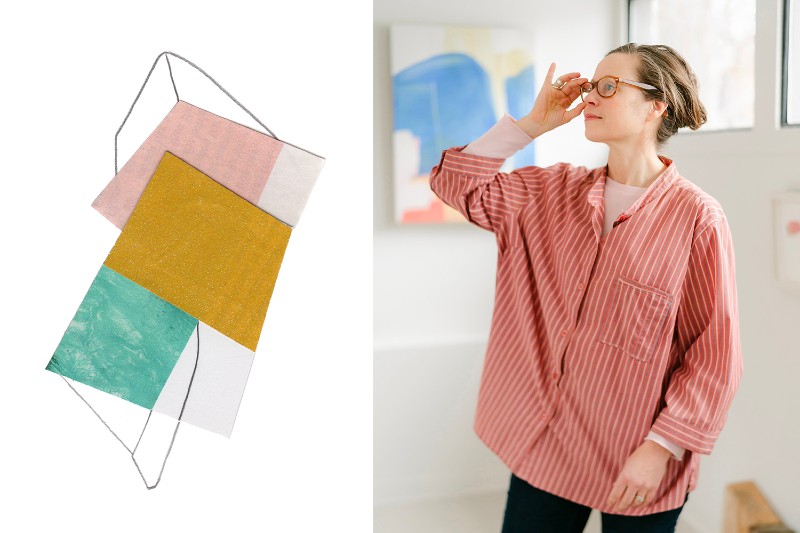
Hannah Burr's art seeks to foster connections, not only between the viewer and the work but also between the viewer and the universe. The Ann Arbor artist works in everything from painting and drawing to sculpture and books, but no matter the medium, Burr's art acts as a prompt for observers to consider how they relate to the world around them and beyond.
Burr's dedication to contemplative matters is perhaps best shown in her series of books, such as Contemporary Prayers to * [whatever works] and Elements: a love letter to all things everywhere, which marry aphorisms or scientific facts with abstract paintings and ask readers to observer how they feel when taking in the words, colors, and shapes on the page. Her forthcoming book, Field Guide to Ambiguity, is currently in its Kickstarter phase, and like Elements, is coming out via Fifth Avenue Press, the Ann Arbor District Library's publishing imprint. This follows a 2021 expanded and completely reworked version of Contemporary Prayers, which was published by Simon & Schuster.
Burr is one of more than 80 artists who will display her works at the West Side Art Hop, held annually in Ann Arbor's historic Old West Side. This year's Art Hop runs June 10 and 11; a map of the home/garage/yard venues can be found here, but Burr will be at 701 5th Street.
I caught up with Burr ahead of the West Side Art Hop as she preps Field Guide to Ambiguity and other projects, many of which she documents in her well-maintained blog, Good Bonfire.
Embracing Our Differences Michigan installs 60 art banners in two Ann Arbor and Ypsilanti parks
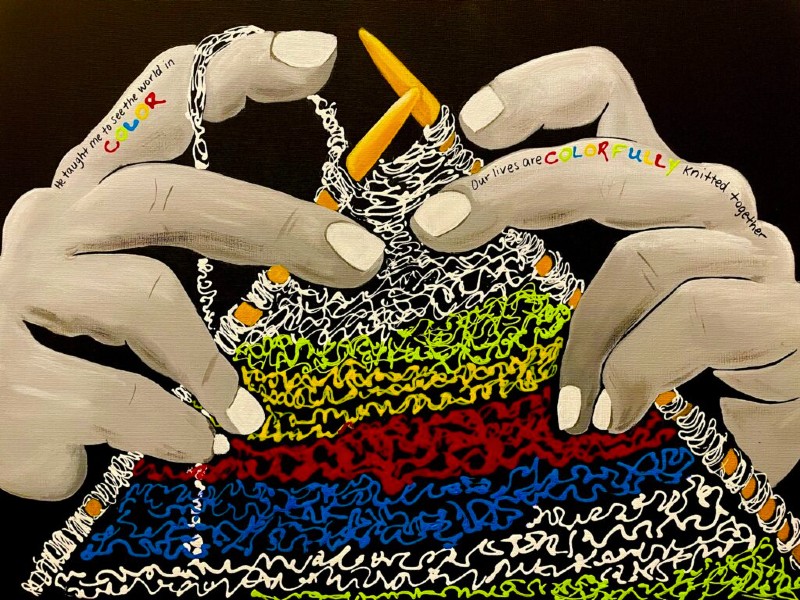
A Florida vacation gave Nancy Margolis a "fabulous" idea.
“A couple years ago I saw this exhibit in Sarasota in one of their parks, and it was so fabulous that I talked to their executive director about bringing it here to Washtenaw County," Margolis says.
The public art exhibit featured enormous vinyl banners with images celebrating diversity and inclusion. It was organized by Embracing Our Differences, an organization Sarasota has supported for 20 years. It spotlights pieces created by students from local schools alongside works by artists from around the world to celebrate diverse identities and inclusion.
In the spring of 2021, Margolis began planning the first Embracing Our Differences Michigan banner installations, calling on her professional experience and passion for amplifying diverse voices to build a coalition that would ultimately bring the endeavor to fruition.
“My background is in anti-poverty programs and community organization,” Margolis says. “I brought myself into this project because I was so thrilled with the idea of a good medium for working on diversity and inclusion.”
By the time Embracing Our Differences’ first exhibit was installed at parks in Ypsilanti and Ann Arbor in May 2022, Margolis and her initial support team had recruited the support of 100 local organizations. The inaugural Michigan exhibition featured 59 images created by students, adult community members, and professionals.
Nature's Way: Cathy Barry's "Connatural" paintings at Matthaei Botanical Gardens explore biological patterns
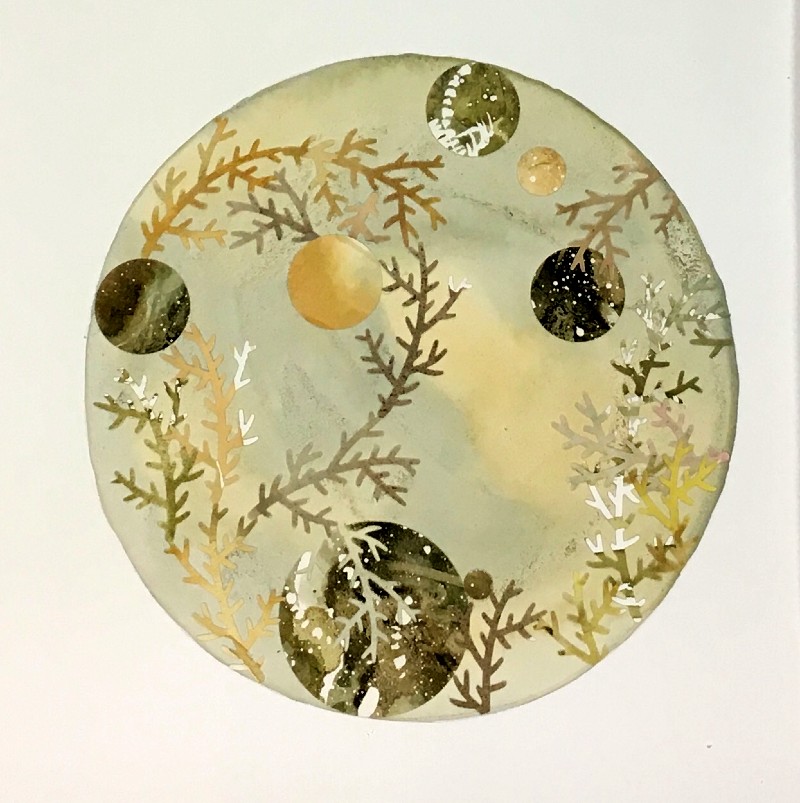
Cathy Barry’s Connatural exhibit at the University of Michigan's Matthaei Botanical Gardens inspires the viewer to look at the natural world through a new lens.
“Nature is the big umbrella of what inspires and has always informed my work,” the Ann Arbor painter writes in her artist’s statement. “My most recent work focuses on collecting and referencing biological sources and patterns found in nature.”
Some of those biological sources even provide colors for Barry's paintings as well as textures embedded into the works.
"I am extracting colors from local sources—in the backyard or the grocery store—including buckthorn, cattail, turmeric root, forsythia, beets, mulberry, yellow and purple onion skins," the Stamps lecturer writes in her artist's statement. "I then reference older practices by experimenting with inlay work of painted paper, traditionally used to create jewelry, furniture, mosaics and textiles. I am creating motifs and abstract compositions by cutting shapes from my plant-based paintings, fitting them together and assembling them. I am integrating materials with form and subject in my painting to evoke a peaceful wholeness that references the innate wisdom of nature."
Nature isn't the only thing referenced in Connatural, though only fans of one of the world's biggest pop stars might notice.
"For any Swifties out there, take a closer look at some of the titles in the exhibition," she said with a smile.
Barry answered a few questions about the exhibit, which runs through April 30.
Eyes on Watercolor: Jeremy Wheeler takes the bold step to get soft in his new collection of paintings at Ann Arbor Art Center
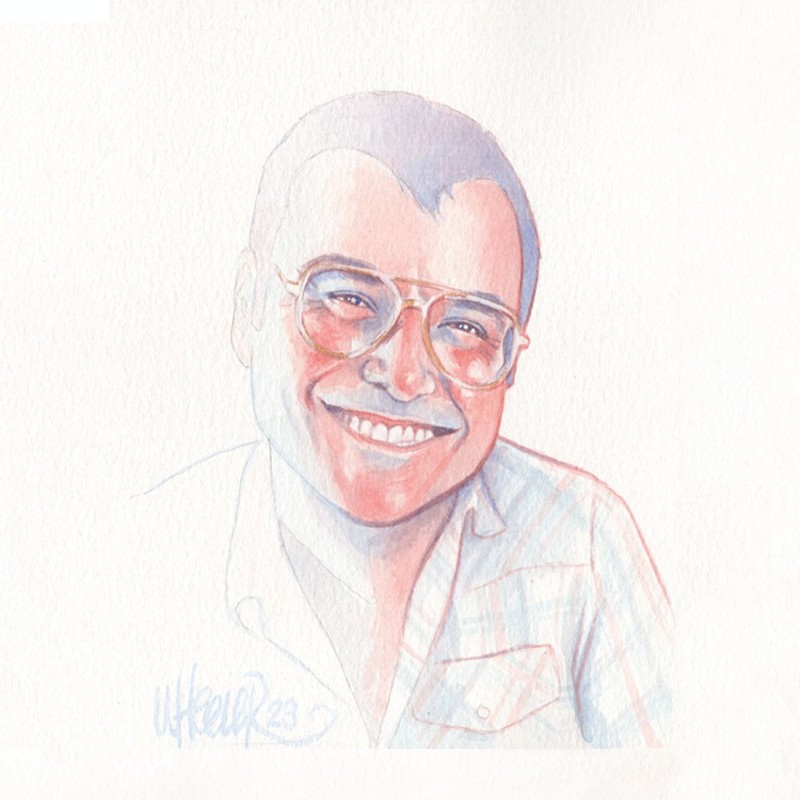
When watercolor paintings started turning up on Jeremy Wheeler's social media accounts, I initially thought he was promoting the work of a friend.
One piece in particular I remember was of Naru, the protagonist warrior in the Predator series prequel Prey. While Wheeler is known for paintings inspired by science fiction and horror films, his use of watercolors for Naru captured the ghostly mystery of her character, not just her strength.
It's absolutely gorgeous.
The cozy, creamy vibe of watercolors such as this is the polar opposite of the bold pop art that brought Wheeler acclaim.
The long-time Ann Arbor creative is best known for his loud, psychedelic concert-poster work and stark, powerful interpretations of movie scenes. Bold lines, hard edges, and kinetic energy were intrinsic to his style.
But Wheeler's move toward the (literally) more fluid and flowing medium of watercolors happened at a time when the whole world slowed down due to Covid-19. Calling his exploration of watercolors a "respite" during the pandemic, there's a quiet, meditative quality to his works in the medium. While Wheeler used the watercolors to continue exploring portraits and figures of film, music, and TV actors, actresses, and characters who inspire him—he was a critic for AllMovie for 12 years—the results were warmer, lighter, and more delicate than his previous work in other mediums.
Fittingly, the title of his first watercolors exhibit matches the sensibilities exuded in the paintings: Soft Collections runs at the Ann Arbor Art Center (A2AC) through March 28, and many works are still available for purchase. While Wheeler is a highly trained fine artist, he used the Art Resources videos made by A2AC, where he serves as the marketing manager, to help guide him in a medium that he hadn't previously worked in very much.
He was attracted by the speed of watercolors compared to the more laborious process of his more standard style, but Wheeler also loved the way he could keep re-wetting the paints until he could find the right balance. That process of trial and error is not afforded in ink washes, which can provide a similar look to watercolors but is more permanent and inflexible in comparison.
I spoke to Wheeler about watercolors and more, and you can see two recent videos he made discussing his work: one with the Detroit Institute of Arts and the other a live painting session he made for A2AC in conjunction with Soft Collections.
ARTS AROUND ANN ARBOR
UNPASTEURIZING THE ARTS


