
Instinct to Play: Thollem McDonas at Kerrytown Concert House
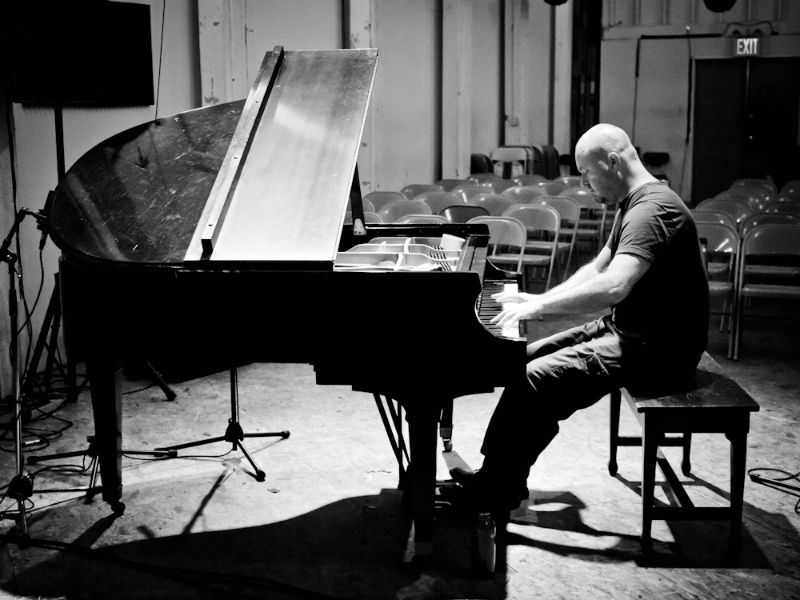
This article on June 28, 2017. We're re-running it because McDonas is returning to Kerrytown Concert House on Thursday, November 7, and he'll again collaborate with local improvisors Piotr Michalowski and Abby Alwin for an evening of spontaneous music.
Thollem McDonas might be a compulsive collaborator. The American pianist, composer, keyboardist, songwriter, activist, teacher, and author's many projects have included several renowned, and lesser known, players over the years, and he doesn't seem to be slowing.
From improvisations with perennial experimental music headliners -- guitarist Nels Cline; double bassist William Parker; the late composer, accordionist, and electronic music pioneer Pauline Oliveros -- to his Italian agit-punk unit Tsigoti and the art-damaged spiel of the Hand to Man Band (also featuring American punk icon Mike Watt on bass and Deerhoof's John Dietrich on guitar), there's little ground McDonas hasn't covered or isn't covering. He might just be the ideal "six-degrees-of" candidate for people into that particular Venn diagram of weird improv, challenging chamber music, and thinking-people's punk rock.
McDonas plays Kerrytown Concert House on Thursday, November 7, with a trio completed by two accomplished locals: reedman Piotr Michalowski and cellist Abby Alwin. We talked with the restless, and very thoughtful, pianist by email about his many collaborations, balancing political action with music, and sitting down at Claude Debussy's piano.
Korde Arrington Tuttle and The National's Bryce Dessner examine photographer Robert Mapplethorpe's work through song in "Triptych (Eyes of One on Another)"
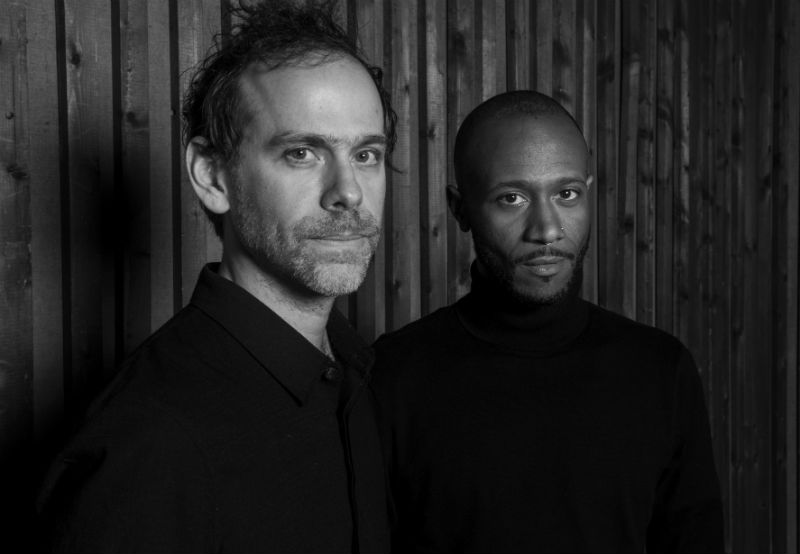
By the time the singers, musicians, and iconoclastic images of photographer Robert Mapplethorpe take the stage at Ann Arbor's Power Center on Friday, March 15, everything should be in place for the premiere of a new UMS-commissioned work examining the late photographer's work and legacy through song.
But just a little over a week ago, composer Bryce Dessner admitted some tweaks were still being made.
"With these types of new works, the music and the staging and the piece is always evolving," he said. "The ink is still drying, so we can kind of feel that, which I think is exciting. There are some last-minute changes I'm making to the score. By the time it gets to Ann Arbor, it will have settled more."
"It" is Triptych (Eyes of One on Another), a re-examining of Mapplethorpe's work 29 years after the famous obscenity trial over a retrospective of his photographs in Cincinnati -- and 30 years after the artist died of AIDS -- made a lasting impression on a teenage Dessner.
Produced by Thomas Kriegsman at ArKtype, with music by Dessner, libretto by Korde Arrington Tuttle, and direction by Kaneza Schaal, the show also features Grammy-winning vocal group Roomful of Teeth with soloists Alicia Hall Moran and Isaiah Robinson.
Dessner has a Wiki entry full of impressive composing credits; he's performed with new music giants, like Steve Reich, Philip Glass, and David Lang; and he plays guitar in Grammy-winning indie rock band The National, which also plays Hill Auditorium on June 25 in support of its latest record, I Am Easy to Find.
I caught up with the prolific musician by phone on the eve of Triptych's music premier at the Walt Disney Concert Hall in Los Angeles.
Edgefest & Piotr Michalowski have helped make A2 a haven for avant jazz

As free-jazz hero Joe McPhee got started on the third movement of Tuesday night's Fringe at the Edge concert at Encore Records, he settled into a minimalist, two-beat groove that was sometimes barely audible.
While McPhee patted his palm against the mouthpiece of his pocket trumpet, drummer Andrew Drury fell in, lightly tapping skins, rims, and cymbals for a nervous, anti-beat.
Piotr Michalowski held his sopranino saxophone and listened a moment, then completed the percussive theme by popping and puffing through his horn, before the trio opened up into long-toned exuberance. When it was over, Drury made Michalowski jump and then grin, as he frantically bowed away at some metal for a screeching effect.
Flexible & Free: Dave Rempis' Ballister at Kerrytown Concert House

Saxophonist Dave Rempis has fond memories of playing Ann Arbor over the years. The Chicago-based improviser and long-time member of renowned free jazz group The Vandermark 5 fondly recalls late-'90s gigs with locally grown and trained players, such as Colin Stetson, Stuart Bogie, and Matt Bauder.
But none were likely more memorable than a workshop for students at the University of Michigan School of Music, where Rempis had applied and been rejected a few years earlier.
Slow Burner: Alabama Slim at the Ann Arbor Blues Festival
In addition to the impossible-to-replicate lineup, the real legacy of the original 1969 Ann Arbor Blues Festival is in how a group of college students helped introduce mainstream, white America to the incredible music being overlooked all around it for years in favor of repackaged versions from the U.K.
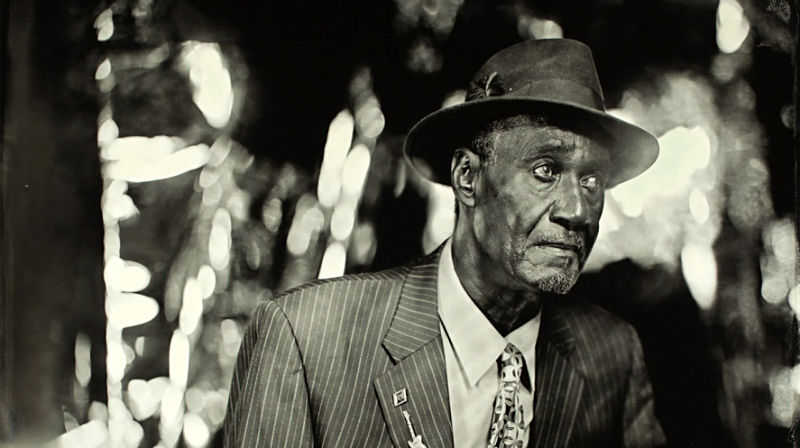
If there's such a secret hiding in plain sight at this year's revived Ann Arbor Blues Festival, it's probably Alabama Slim. Born Milton Frazier in Vance, Alabama, Slim didn't record an album until he was in his 60s, when he finally teamed up with his cousin, fellow New Orleans guitarist Little Freddie King (not to be confused with the late Chicago guitar great Freddie King) to record The Mighty Flood for the Music Maker Relief Foundation.
Slim's a first-rate storyteller, whose warm baritone voice and tasteful, hypnotic playing recall all-time greats, like Muddy Waters or John Lee Hooker on a slow burner.
We talked to Slim briefly by phone on the eve of a family reunion in Birmingham, Alabama, where he was looking forward to some good food, drinking a couple of beers, and relaxing after a long drive.
Resurrected: James Partridge on the 2017 Ann Arbor Blues Festival

As an East Coast transplant and late-comer to the blues, you can forgive James Partridge for not knowing Ann Arbor's storied history with the world's greatest blues musicians until fairly recently (or exactly blame him -- there's no Beale Street or other marker to speak of).
But as founder of the recently formed Ann Arbor Blues Society and co-organizer behind the return of the Ann Arbor Blues Festival, which takes place Saturday, August 19, at Washtenaw Farm Council Fairgrounds, he's making up for lost time quickly.
Put a Spell on You: Michael Erlewine on the 1969 Ann Arbor Blues Festival
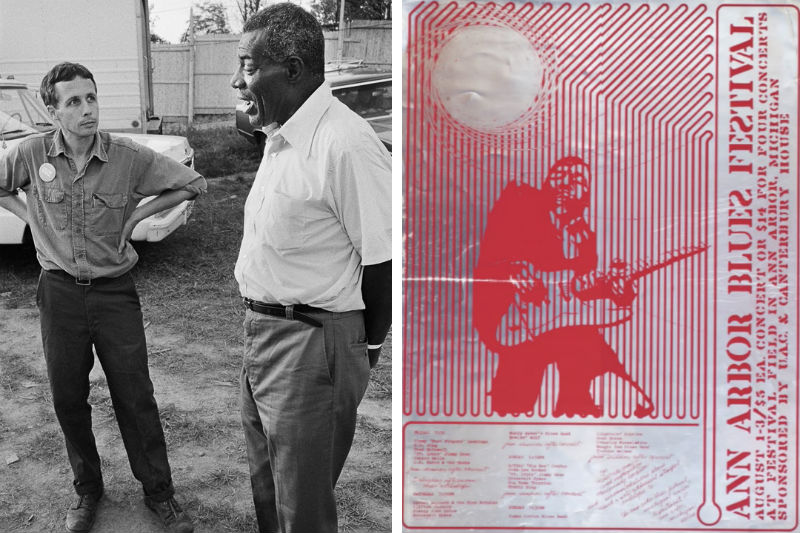
During the early folk revival of the pre-Bob Dylan 1960s, music historian and author Michael Erlewine says fans were more interested in finding the most authentic form of the music than the next great songwriter. Conserving a dying art form was the priority at gatherings like the Newport Folk Festival.
So when music heads turned their attention to the electric blues, which was largely ignored on the folk circuit, they had the same impulse. But they soon learned it was misguided.
"We wanted to revive it -- to preserve it, protect it, and save it," Erlewine says. "But to our huge surprise, it wasn't dead. It didn't need reviving. It was just playing across town behind a racial curtain of some kind. To find what we thought was a dying music was very much alive, it was just another whole world for us."
In August 1969, a group of University of Michigan students led by organizers Cary Gordon and John Fishel, brought that world home to Ann Arbor with the first ever Ann Arbor Blues Festival.
As founders of the town's resident blues band, The Prime Movers -- which eventually featured drummer Iggy Pop --
and avid students of Chicago blues, Erlewine and his brother Daniel Erlewine were enlisted to help track down and care for the talent.
And there was so much talent: B.B. King, Mississippi Fred McDowell, Muddy Waters, Magic Sam, Big Mama Thornton, Son House. The list goes on. Nearly 20,000 people are estimated to have witnessed that first-of-its-kind gathering at the Fuller Flatlands near U-M's North Campus.
With another Ann Arbor Blues Festival reboot coming on Saturday, August 19, at the Washtenaw County Fairgrounds, it seemed like a good time to check in with Erlewine, who went on to found the All-Music Guide and edit several books on blues and jazz. His 2010 book with photographer Stanley Livingston, Blues in Black and White, is an excellent, loving tribute to the original blues festivals in pictures and prose.
Erlewine talked with us by phone from his home in Big Rapids about the heady days of those early fests, tripping out on Howlin' Wolf's massive voice, and drinking early into the morning with Arthur "Big Boy" Crudup and Big Mama Thornton.
From the Sludgy Banks of the Huron: Bubak at FuzzFest 4

If you feel lured by some mysterious wailing over the next couple of weeks, be warned. Like the shadowy, mythic figure of its namesake, Ypsilanti-based stoner-metal duo Bubak are skilled in deception, masking sinister riffs and morbid tales within hook-filled earworms from which you may never escape.
"Bubak is from Czech folklore: pretty much their version of a Boogeyman," said drummer Justin O'Neill by email. This "scarecrow-looking creature, whose face is usually obscured by its hat," hides out by riverbanks and makes sounds like a baby crying, which lures unsuspecting victims to it. "Bubak then kills them, weaves their souls into garments, rides around in a cart pulled by black cats ... y'know, like a Bubak does."
Also featuring Jeff West on bass and vocals, the band is effectively the rhythm section of defunct psychedelic-metal band Zen Banditos, which split up when guitarist Andy Furda left town.
Bubak released its debut EP late last year online. CDs are now available, too, and the duo still plan to press it on vinyl. Like its fantastic comic-horror cover art by Tony Fero, the EP's four songs are as fun as they are menacing, heavy on fuzzed-out chromatic bass runs, swaggering shuffle beats, and West's awesome growl.
We traded emails with O'Neill and West in advance of their Thursday, June 1, show as part of FuzzFest 4 at the Blind Pig.
Exploring the vibrational universe of Avram Fefer and Michael Bisio
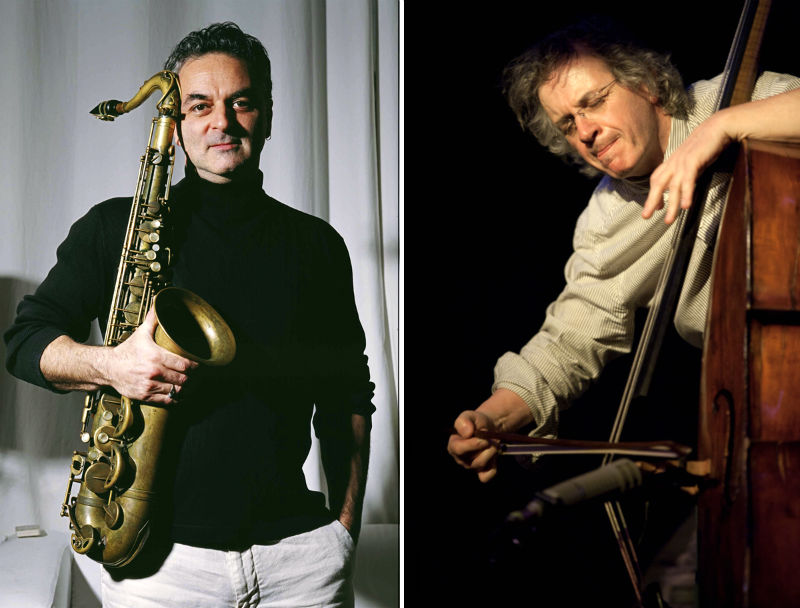
If saxophonist Avram Fefer can play a compelling duet with a towering wall of sheet metal, chances are good he sounds great improvising with just about anyone. Which sets the bar pretty high for tonight's Kerrytown Concert House performance with longtime collaborator bassist Michael Bisio.
Fefer was recently in London for the latest session in his Resonant Sculpture Project -- which he described by email as "a series of immersive, site-specific performances exploring the relationship between improvisation, space, acoustics, permanence, and sculpture" -- during which the reedman plays at, around, and sometimes within the large-scale, minimalist creations of sculptor Richard Serra.
It's easy to imagine tonight's show going more like a conversation between old friends who happen to be experts in their fields; a two-person TED Talk on intersecting disciplines as told on reeds and strings.
Or as Bisio put it by email, "Both Avram and I tell a good musical story."
The two players, composers, and bandleaders have been telling that story together in some form since the 1990s, either in Bisio's Quartet or as a duo. Fefer's lyrical approach to sax and bass clarinet effortlessly folds in several styles to create an organic, singular sound that pairs perfectly with Bisio's limber double-bass lines and expressive bowing.
We talked with Fefer by email -- with Bisio chiming in, too -- about developing his rich, varied style; composing and tracking the duo's lone solo record in roughly 25 years of playing together; and how he got started jamming with inanimate objects.
Need a light? Wizard Union Collective carries a heavy torch

It's fair, if lazy, to call Wizard Union a stoner-metal band. The Ann Arbor-based three-piece specializes in huge, slow sounds with roots running back to Black Sabbath, and its song titles and lyrics namedrop ancient bongs and wizard pipes. But there's a simple, no-gimmick efficiency and economy of scale to what they do that's also punk as punk.
On their latest record, Phantom Fury, released late last year, the band refined its chugging, earworm sludge, while also introducing classic rock shuffles and early grunge grooves (and an outro to one tune that could be a sequel to "KISS: Love Theme From KISS."). In the middle of it all, guitarist and vocalist Samir Asfahani's throaty bark sounds shredded and desperate not to get drowned out by the drones.
On Saturday, April 8, Wizard Union will play Crossroads Pub in Ypsilanti along with Toledo-based old school death metal band Mutilatred and hardcore punk acts No/Breaks and Hellghillies. Chances are good every human in attendance could compulsively lurch in rhythm when the band launches into old favorites, like "Into the Wizard's Sleeve."
We talked to Asfahani by email about the band's new efforts as a collective, demoing songs in his car during his lunchbreak at work, reviewing extreme music for his entertaining and informative personal blog, and distancing himself and the band from the sexism and misogyny that "plague" the metal scene.
ARTS AROUND ANN ARBOR
UNPASTEURIZING THE ARTS


