
A Portrait Study: Ann Arbor Film Festival highlights the Black, queer, experimental cinema of Edward Owens
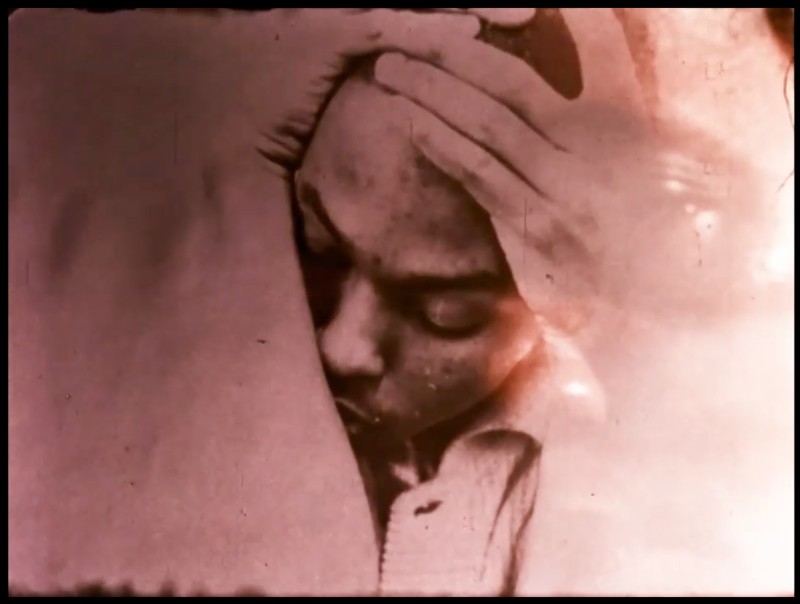
Edward Owens' story may have been lost to history were it not for film programmer, writer, and Bard College professor Ed Halter.
An obscure figure from one of cinema's most elusive realms, Owens was a Black, queer, experimental filmmaker from Chicago whose career was cut tragically short.
In 2009, intrigued by an entry in the Film-Maker's Co-Op catalog about the experimental short Private Imaginings and Narrative Facts, Halter reached out to Owens decades after he left his life in filmmaking behind. Their conversations brought newfound context to Owens' artistic vision, which helped amplify the voice of an artist whose compelling story was at risk of being relegated to obscurity.
Owens' life and limited collection of works is the subject of the 61st Ann Arbor Film Festival (AAFF) program "Remembrance/Vacancy: The Films of Edward Owens" at the State Theatre on Thursday, March 23, 7 pm.
The event offers audiences the rare opportunity of seeing three Owens films back to back: Remembrance: A Portrait Study (1967, 6 min.), Private Imaginings and Narrative Facts (1966, 6 min.), and Tomorrow's Promise (1967, 45 min.).
Following the screenings is a conversation between Emily Martin, who programmed the event, and Jessica Ruffin, an assistant professor in the University of Michigan's Department of Film, Television, and Media.
Societies of Cinema: Frank Uhle creates AADL exhibit, hosts a roundtable at the 61st Ann Arbor Film Fest discussing the cultural influence of campus film groups
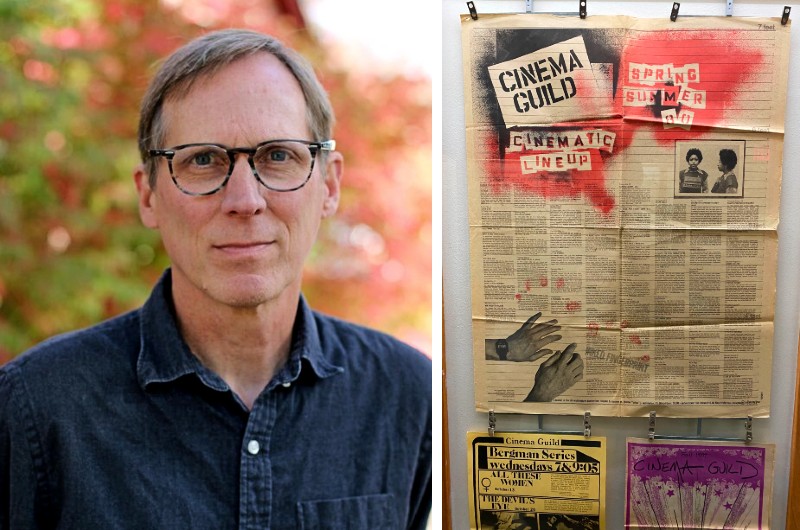
Frank Uhle's upcoming book, Cinema Ann Arbor, covers the entire scope of film history in the city, from the old theaters no longer with us to the students who went on to be famous moviemakers.
But the campus cinema societies, who brought art films and experimental movies to town, are the heart of the tome's 344 pages.
Cinema Ann Arbor is a co-publication of Fifth Avenue Press—the Ann Arbor District Library's publishing imprint—and the University of Michigan Press and officially comes out in June, but Uhle will have 50 copies for sale in time for the roundtable he's hosting on Friday, March 24, as part of the 61st Ann Arbor Film Festival (AAFF).
Uhle will moderate "Cinema Guild and Campus Film Societies: Their History and Legacy," a discussion with former University of Michigan film society members, including Hugh Cohen, a longtime cinema professor, a juror at the second AAFF in 1964, and the faculty advisor to Cinema Guild in 1967 when he and three others were arrested for showing Flaming Creatures, a short that was deemed obscene. Cohen is joined by Dave DeVarti (Alternative Action film series), Philip Hallman (Ann Arbor Film Cooperative), and Anne Moray (Film Projection Service).
To coincide with AAFF, Uhle also put together an exhibit at AADL's Downtown location, "Cinema Ann Arbor: Film Societies, Film Festivals, and Filmmaking in the Analog Era," which is on display through April 13. It features artifacts from Uhle's personal collection as well as material he gathered during his extensive research while writing Cinema Ann Arbor. (Additionally, Uhle and AADL's archives team are posting material to an online repository at aadl.org/cinemaannarbor.)
We'll speak to Uhle more in-depth about Cinema Ann Arbor when it comes out this summer (though you can pre-order it now). Our interview below is specifically about the cinema societies that helped influence Ann Arbor culture for nearly 70 years as well as his AADL exhibit.
Three Years Later "The Fourth Messenger" Gets Midwest Premiere at The Ark on March 18
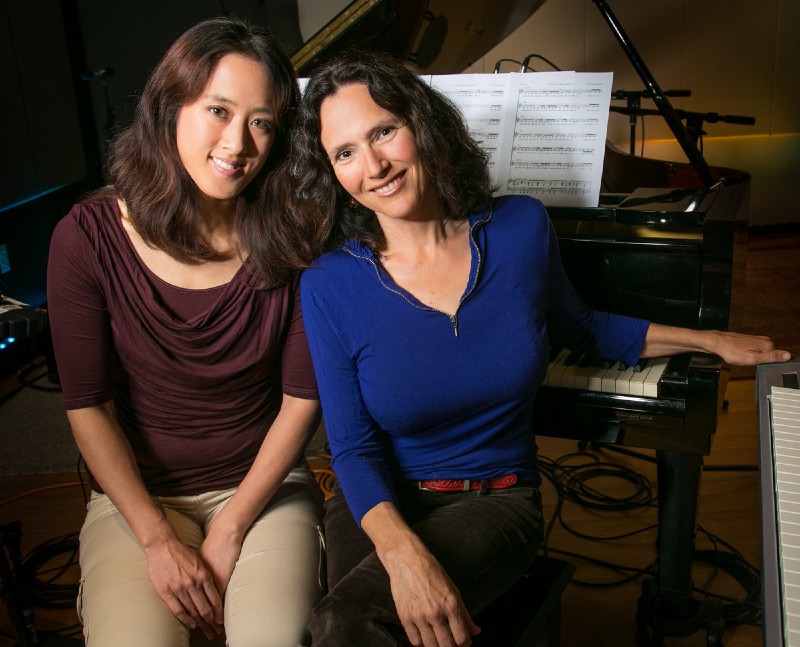
Three years ago, The Ark was set to be the venue for the Midwest premiere of The Fourth Messenger, a musical with a modern perspective on the life and teachings of the Buddha. Then the pandemic hit and the musical was canceled.
Now, almost three years to the day, The Fourth Messenger, with book and lyrics by Tanya Shaffer and music and additional lyrics by Vienna Teng, will finally get its Midwest premiere at The Ark on March 18. The concert-style performance will be a benefit for The Ark, Ann Arbor’s popular home for folk, jazz, and alt-country.
In an interview with Shaffer in 2020, she described what inspired the musical while she was on a spiritual retreat.
“The idea came to me on a nine-day silent retreat when I was supposed to be clearing my mind,” she said. “I was thinking about the story of Buddha’s enlightenment, where he was found under a tree and vowed not to get up until he found enlightenment. Then for many days and nights, all the temptations of the world are trying to get him up. And it came to me that it would be cool as a song and dance, the temptations standing under a tree and then thinking the whole story would be a musical because it has that scale of a hero’s quest, and so I got excited on the retreat and for many hours forgot about my breath and I thought about the musical.”
Shaffer didn’t pursue the idea for another five years. She said she had trouble deciding how to handle the story about the historical Buddha and his teachings.
“I started to think how would people view this story if it was a woman, and I wanted to update it and make it feel very relevant and contemporary,” Shaffer said. “So it took me five years to find my way into it and then many years to workshop.”
The Fourth Messenger premiered at the Ashby Stage in Berkeley, California, in 2013 and was presented at the New York Musical Festival in 2017.
Bach to the Start: U-M professor Dr. James Kibbie revisits J.S. Bach's complete organ works in a series of concerts as he prepares to retire after 42 years
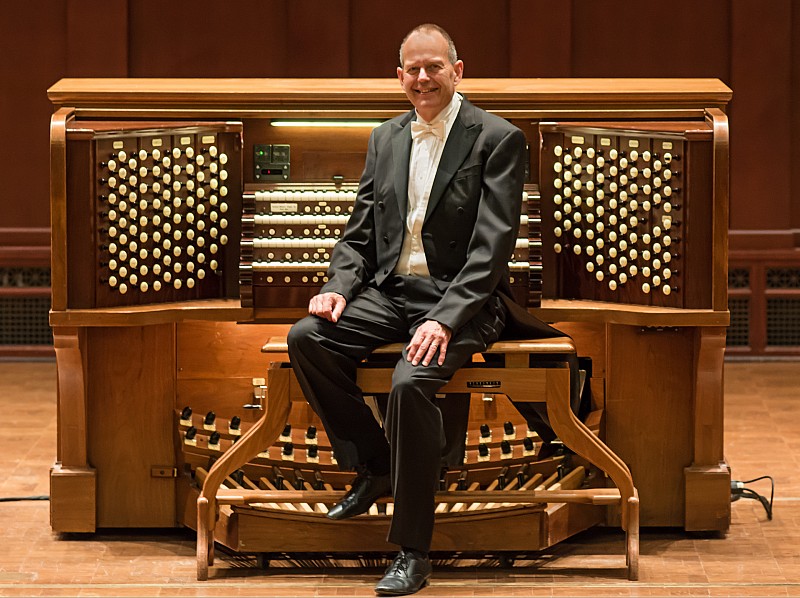
On the evening of April 16, when Hill Auditorium fills with the opening notes of Johann Sebastian Bach’s famous Passacaglia and Fugue in C minor, University of Michigan organ professor James Kibbie will be on the precipice of completing an incredible achievement.
This work is the final of Bach’s 281 solo organ compositions that Kibbie will perform in his 18-concert series that began in September 2022. It's a monumental musical offering that marks the end of Kibbie’s 42-year tenure as professor of organ at the University of Michigan.
The concert series also marks the culmination of Kibbie’s life-long relationship with Bach’s music.
“I’ve been working on this a long time,” Kibbie says. “Some of the first simple pieces I learned on the organ were by Bach.”
Tight Fit: Misty Lyn & the Big Beautiful worked their way through a car crash and a pandemic to navigate the "Narrows"
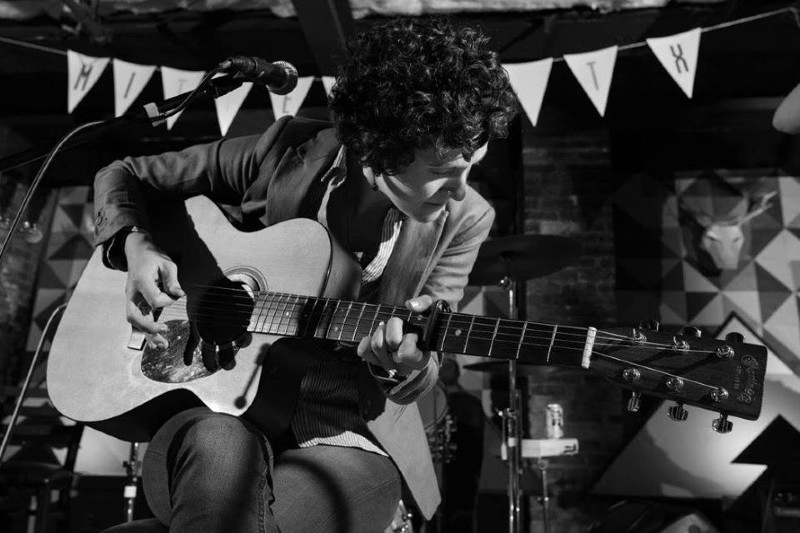
It’s been a while since local acoustic music fans have heard from Misty Lyn Bergeron, the accomplished singer, songwriter, and leader of the standout roots band Misty Lyn & the Big Beautiful.
A serious car crash, a global pandemic, and other issues created some challenges and delays, but at last there’s a new album out, Narrows, and it’s more than worth the wait. It features Bergeron’s warm, expressive voice; her first-rate band, and a fresh batch of well-crafted songs about some big themes like love, friendship, and perseverance.
To celebrate Narrows, Misty Lyn & the Big Beautiful are having a record-release show at The Ark in Ann Arbor on February 17.
"Jim Roll will be our special guest, and it’s also how I’m celebrating my birthday," Bergeron said. "The Ark is my absolute favorite venue, and it has been years since my whole band has been on that stage. I am so excited to share this music alongside these amazing artists. It’s going to be a special night for us!"
Bergeron is also a talented photographer, but we focused on her music in this email interview.
U-M students go back to the Victorian era in Oscar Wilde’s “The Importance of Being Earnest"

It was still early in rehearsals and cast members were beginning to master an unfamiliar language as well as a different set of values in a distant time. It was the ’90s when a queen reigned and defined an age.
No, not the 1990s, the 1890s.
That’s when Oscar Wilde’s The Importance of Being Earnest made its debut.
The University of Michigan School of Music, Theatre & Dance will present Wilde’s giddy and ever-popular comedy February 16-19 at the Arthur Miller Theatre.
Every year musical theater majors at the University of Michigan perform in a non-musical production. It’s all part of making theater students at ease in both musical and non-musical productions and honing their skills.
Production director Vincent Cardinal, a professor of musical theater at the University of Michigan, has directed and produced scores of productions across the country and is also a noted playwright. Cardinal said Wilde makes it easier for the actors to get into the Victorian era.
“You’re never in better hands than someone like Oscar Wilde,” Cardinal said. “Wilde is going to give them great language, really great characters, and they’ll be really good. When not solving problems, they’re becoming really good at their craft.”
Jen Silverman’s absurdist dark comedy "Bonnets (how ladies of good breeding are induced to murder)" is a feisty feminist fable
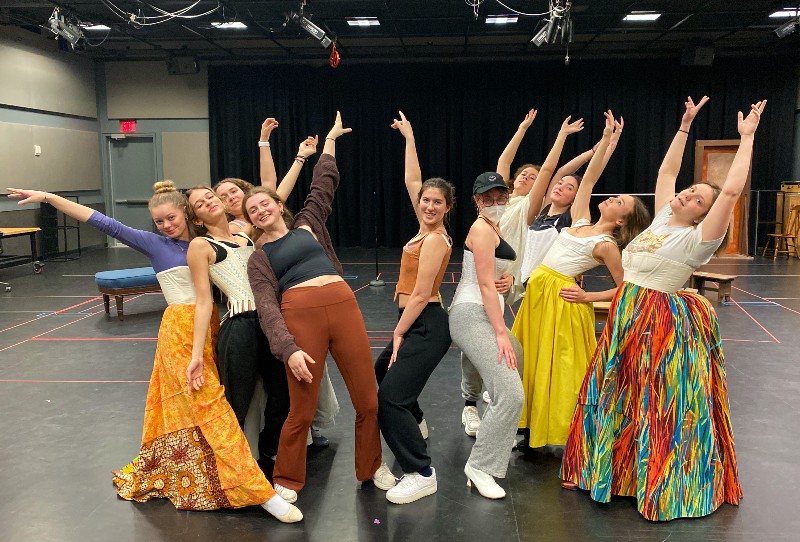
Jen Silverman’s Bonnets (how ladies of good breeding are induced to murder) is so violent that it took a fight director and two assistants to choreograph it. Death by poison arrow, chainsaw, Ninja—it’s all there for your delight and horror. Even God, a character in the play who opens every scene, is powerless to stop it.
The chorus of one song in Bonnets goes like this:
Chop, chop, chop, chop, chop, chop
We killed a man a-piece and we just couldn't stop!
Glug, glug, glug, glug, munch, munch,
Join me for tea-time, you might not live to lunch.
Will anyone survive in the dark comedy that runs February 16-19 at Lydia Mendelssohn Theatre?
Pricilla Lindsay, who directs University of Michigan theater students, says the play shifts between three eras. “Silverman picked three of the many times men have subjugated women—Salem in 1690, England in the 1890s, and France in the 1600’s, during the reign of Louis XIV. All three periods are not special but indicative of women being moved to the side. In our play, women wreak havoc and get revenge by actually murdering.”
These women don’t stop at killing their abusers.
“A young girl who is having an affair with a married man accuses his wife of being a witch,” Lindsay says. After his wife hangs, the man decides to leave for Boston—without his young paramour. ”You’re dead to me,” she declares.
In this play, that can only mean one thing.
Ann Arbor Musical Theater Works Brings The Cult Musical “Moby Dick” to the Children’s Creative Center
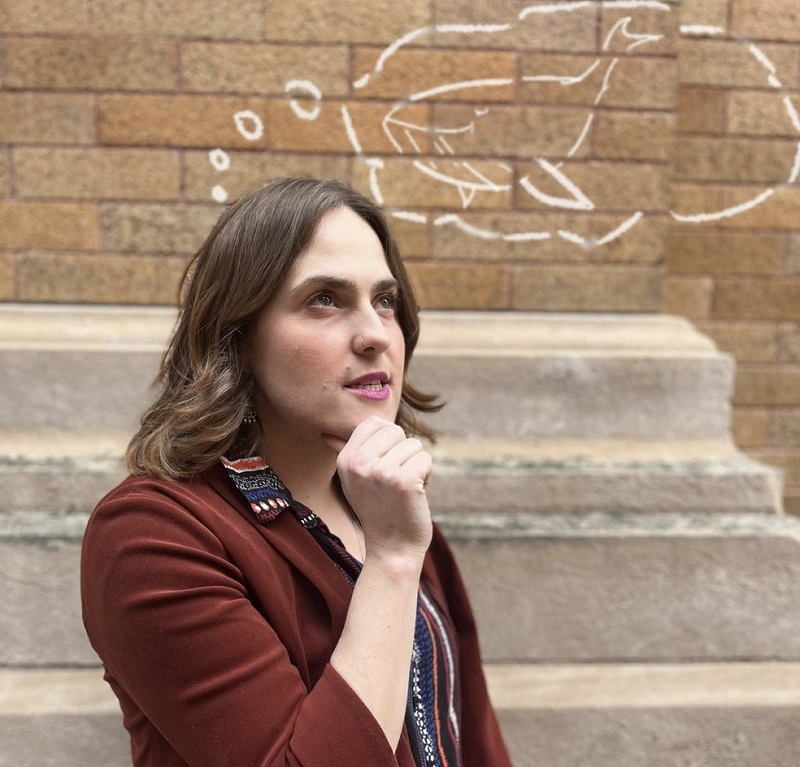
What’s weirder than learning that there’s a stage musical adaptation of Herman Melville’s Moby Dick?
Learning there are two, actually, one from 1990 and another from 2019.
And the Moby Dick adaptation that came first, which includes a book by Robert Longden along with music and lyrics by Longden and Hereward Kaye, is the one that local theater artist Ron Baumanis has been jonesing to stage via his company, Ann Arbor Musical Theater Works.
“Whenever I see a show, whether it’s on Broadway or the West End, I always leave thinking, ‘Would I want to do it or not,’” said Baumanis, whose Moby Dick production begins its two-week run February 9 at The Children’s Creative Center.
“When I saw this in the West End, by intermission, I thought, ‘I’ve absolutely got to do this show someday.’ … I was drawn to the weird mix of the show’s all-out hilarious comedy with British pantomime and a lot of burlesque elements.”
Searching for the Right Words: Julia Cho's award-winning "The Language Archive" makes its Michigan debut at Theatre Nova
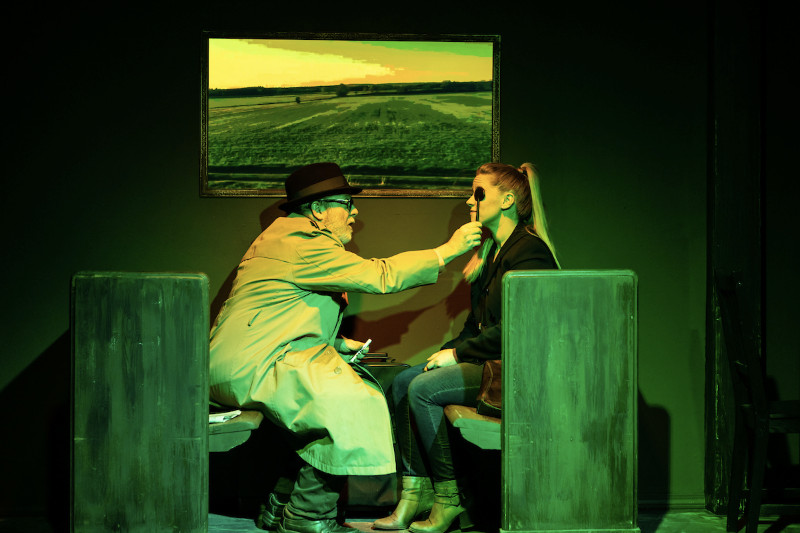
When Julia Cho read about dying languages, she wondered if losing a language meant something larger—losing a whole way of looking at the world.
In her whimsical play The Language Archive, Cho explores the questions: Do languages that develop between people in a country (or a marriage) die when the participants die? Does the culture die when the language does?
First produced in 2009 at The South Coast Repertory Theater in Costa Mesa, California, and then in 2010 at the Roundabout Theatre Company in New York City, The Language Archive makes its Michigan debut at Ann Arbor's Theatre Nova, February 3-26, directed by Carla Milarch. (The play won the 2010 Susan Smith Blackburn Prize, awarded to a new English-language play by a woman.)
“There are sixty-nine hundred languages in the world. More than half are expected to die within the next century,” says George, a linguist and the play’s protagonist. In addition to his native English, George speaks eight languages including Greek, Cantonese, Esperanto, and Elloway—the last of which is a dying fictional tongue.
Chicago percussionist Kahil El’Zabar brings spiritual energy to Encore Theatre’s "American Songbook" concerts
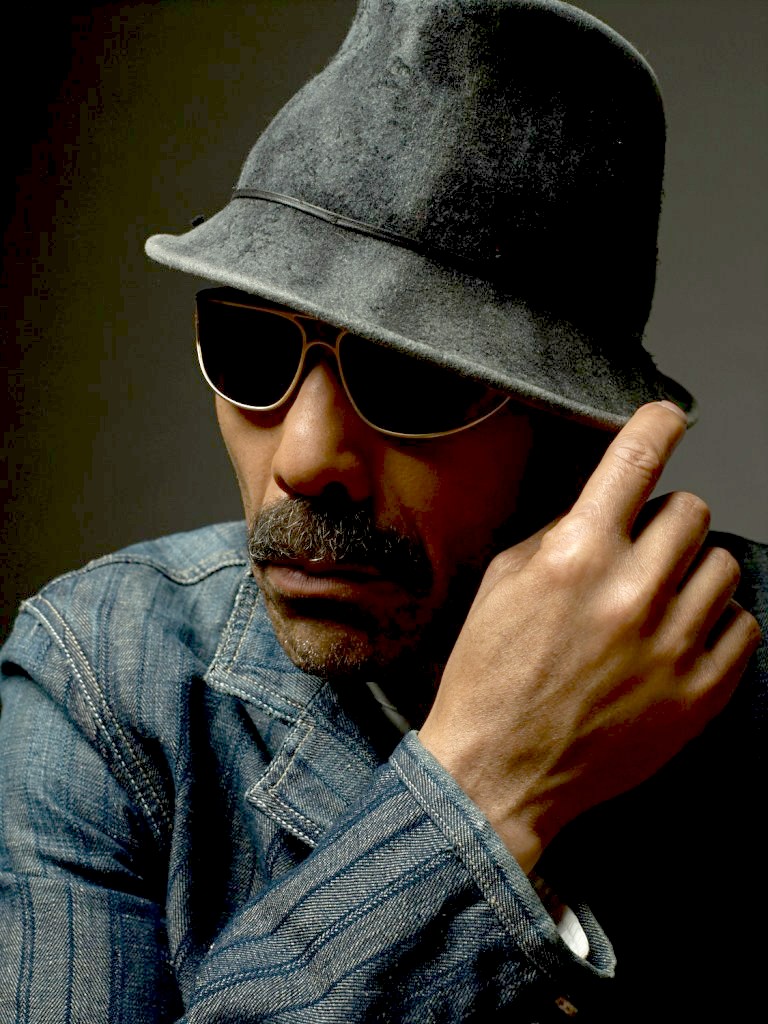
Kahil El’Zabar has a very clear memory of the greatest performance he ever attended.
“I saw [John] Coltrane at a club called McKee’s in Chicago,” the jazz percussionist and band leader said in a phone interview. “I was 15 and [drummer] Elvin Jones went to sleep while he was playing and never lost a beat. The telepathy, the power of communication and connectivity, of mind and spirit in music, that one moment changed my life because I knew that I would want to be part of that embrace for the rest of my life. I would always search for that moment when you are beyond consciousness and can express something greater than yourself. I hope for that every time. When you do it, it is the most exciting and humbling experience you ever experience.”
El’Zabar and his Ethnic Heritage Ensemble will bring his unique approach to the Encore Musical Theatre in Dexter, Feb. 3-4. Last year at about the same time, El’Zabar and his group performed at Encore’s Modern Jazz Meets Musical Theatre; this year the theme is A Modern Exploration of the American Songbook.
The innovative, award-winning musician will celebrate his 70th birthday and the 50th anniversary of the Ethnic Heritage Ensemble next year. His career has been influenced by both his African heritage and growing up in one of America’s legendary jazz cities, Chicago.
El’Zabar’s music has a rich spiritual component that comes from both his experience in Africa and his exposure to the masters of jazz.
“When I came out of Lake Forest College in ‘73, I had an eight-month residency in Ghana,” he said. “I was at the University of Ghana in a city called Legon. Just how people related on a human level, the connection of touch, not just physical but eye and voice and through performance; it seemed to have this spirit that I wanted to retain in my own music.”
As a teenager in Chicago, he got to know performers like Pharoah Sanders, Coltrane, and the Art Ensemble of Chicago. He admired the energy.
ARTS AROUND ANN ARBOR
DEFINITELY NOT HOMOGENIZED


