
Friday Five: Jienan Yuan, Dabrye, Janelle Haskell, Jonathan Killstring, marto.matic
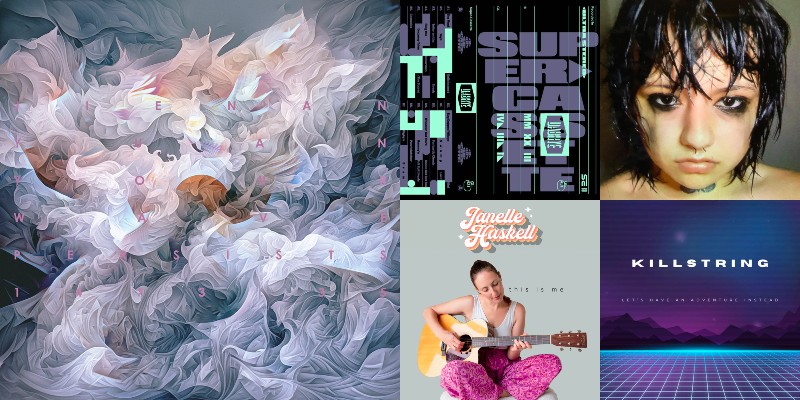
Friday Five highlights music by Washtenaw County-associated artists and labels.
This week features minimalist beauty from Jienan Yuan, a beat-tape teaser by Dabrye, fingerstyle folk by Janelle Haskell, retro-wave by Jonathan Killstring, and experimental musings by marto.matic.
Things to See: Pulp Art Exhibit Roundup for Winter
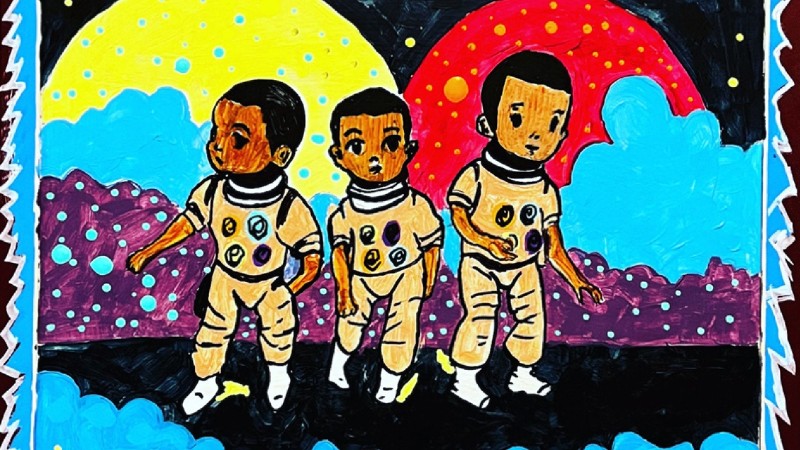
While it’s too cold to spend time outside this winter, there are plenty of places to stay warm indoors and peruse artwork from local creatives. We’ve compiled a comprehensive list of visual art exhibits and events around Washtenaw County to visit and enjoy this season.
720’ 10”
January 25 to April 12
North Campus Research Complex Galleries, Ann Arbor
Designer and sculptor Peter Dunn’s body of work is rooted in the shutdown of shops and studios during the pandemic and the inability to receive materials for large sculpture and furniture fabrication. At its core, much of his work studies the manipulation of simple geometry. Dunn looks at the form from different forced perspectives—exploding, augmenting, slicing, repeating, and lighting. An opening reception will take place January 25 from 4 pm-7 pm.
Stamps School of Art & Design Staff Exhibition
January 25 to April 12
North Campus Research Complex Galleries, Ann Arbor
This exhibit features artwork from U-M’s Penny Stamps School of Art & Design staffers Catherine Coveyou, Elizabeth Dizik, Veronica Falandino, Rita K. Lee, Matthew Pritchard, Joel Rakowski, Joe Rohrer, and Veronica Tabor. An opening reception will take place January 25 from 4 pm-7 pm.
Anything Goes: All Media Exhibition
January 26 to March 2
Gutman Gallery, Ann Arbor
The fourth annual all-media exhibition will highlight artists, styles, and techniques of all kinds and be juried by Ingrid Ankerson, an Ypsilanti printmaker, quilter, graphic designer, and instructor.
Love Country: Erin Hahn's latest romance novel is humorous, songful, and lyrical

Nothing burns like unrequited love or miscommunication.
The two characters in Erin Hahn’s aptly named new romance novel, Friends Don’t Fall in Love, prove the title either right or wrong by the end of the book. This novel is the spicy second addition to Hahn’s trilogy that started with Built to Last.
Friends Don’t Fall in Love takes place in Nashville, and things are already complicated given that character Lorelai Jones rents the other half of her friend—and crush—Craig “Huckleberry” Boseman’s duplex. The plot presents humor, missteps, sex, music, romance, and the potential for redemption.
The cards are not exactly stacked for these two. Craig and Lorelai are both navigating their thorny profession—and pasts. Craig is growing his indie record label and songwriting prowess after separating from the popular but toxic lead singer, Drake Colter. Lorelai is taking baby steps to rebuild her career after getting kicked out of the spotlight—a choice she made at her last concert—and having that same singer, Drake, break off their engagement.
Despite the setbacks, Craig and Lorelai are both in it for the love of music. Craig reflects on his connection to songs:
Friday Five: Telesonic 9000, skyline, Kat Steih, Tru Klassick & Ilajide, Live at Fun Fest 2023

Friday Five highlights music by Washtenaw County-associated artists and labels.
This week features new-wave rock by Kat Steih, slowed-down R&B haziness by skyline, Fundamental Sound Co. concert videos from Fun Fest 2023, a new single and video by rapper Tru Klassick, and a multimedia single by Telesonic 9000.
50 Years of Hip-Hop: Influential albums From Washtenaw County
Hip-hop started in the Bronx in 1973 and spread across the world to become one of the most popular and influential genres ever created.
There were numerous 50th-anniversary celebrations for the art form in 2023, and we're working on some articles about the history of hip-hop in Washtenaw County that we’ll be sharing soon.
But before that, we wanted to share some influential hip-hop records made by Washtenaw County artists—as identified through research and interviews with local creatives for our upcoming history pieces.
There were plenty of other important recordings that were cited, too, but we're highlighting these selections because they’re the only ones you can listen to online. (A broader list will accompany one of our upcoming articles.)
Read on and drop us a line at pulp@aadl.org if you want to share stories and memories about the Washtenaw County hip-hop community.
For Love and Money: U-M professor Scott Rick explores how couples navigate finances in "Tightwads and Spendthrifts"
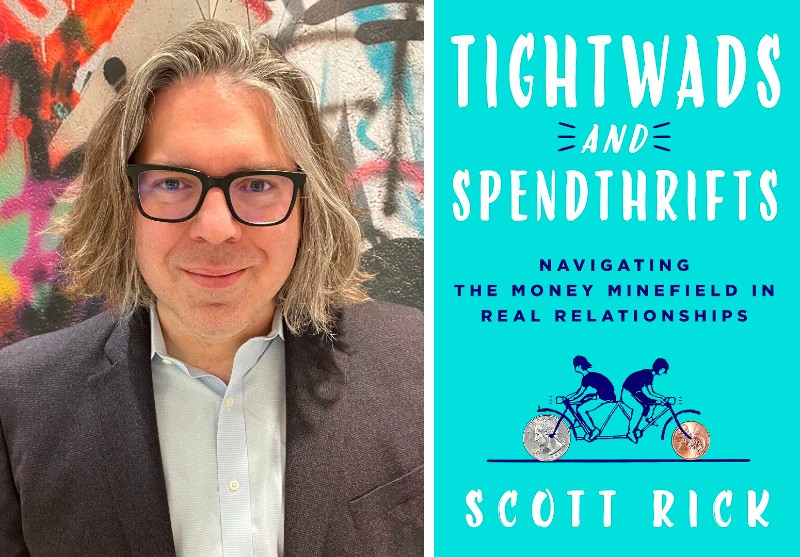
In my family, I’m the person who insists on setting apart the cans that can be returned for deposit, while my husband says, “What do you get, three dollars? Not worth it.”
Perhaps not. But different philosophies about money, at the macro and micro level, are all-too-common in marriage. I mean, there’s a reason that finances always make the list of “things couples fight most about,” right?
To address these differences, Scott Rick, a U-M Ross School of Business marketing professor, has a new book called Tightwads and Spendthrifts: Navigating the Money Minefield in Real Relationships. Billed as distinct from conventional self-help or personal finance books, the book instead uses behavioral science as scaffolding for a broader discussion of how spending plays into our sense of personal identity; why we’re sometimes attracted to people who are quite unlike ourselves (in terms of spending); and practical ways to work through money-related conflicts.
Friday Five: The Boy Detective, JDSY, ness lake, Same Eyes, LinX & KAISTO
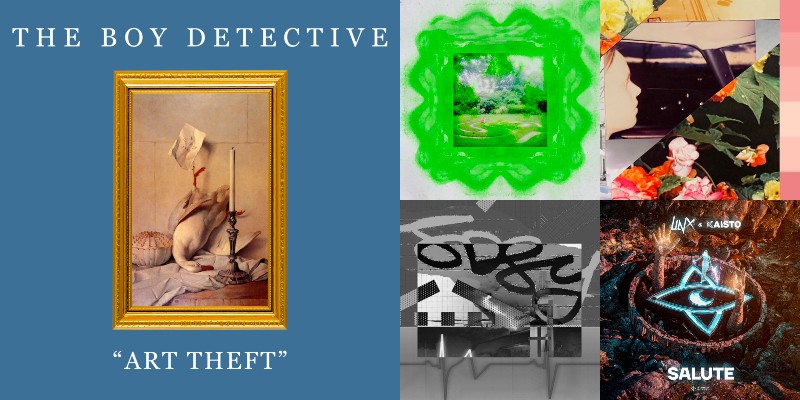
Friday Five highlights music by Washtenaw County-associated artists and labels.
This week features ska-punk by The Boy Detective, electronic all-over-the-placeness by JDSY, indie-electronic emo by ness lake, synth-pop by Same Eyes, and rave music by LinX & KAISTO.
Peak of Success: Nick Baumgardner and Mark Snyder Revisit U-M Wolverines’ 1997 National Championship Season in New “Mountaintop” Book
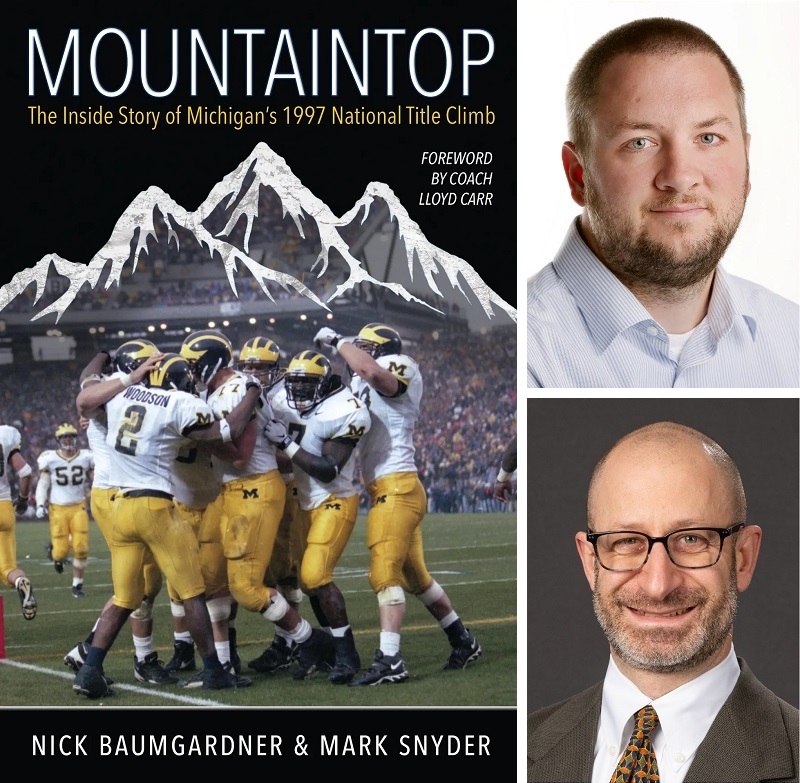
Books about the University of Michigan’s football team could easily fill several shelves, but strangely, one thing that’s been missing is a deep-dive chronicle of the 1997 National Championship season.
Don’t worry, though. Longtime local sports journalists Nick Baumgardner and Mark Snyder just filled that gap by way of a brand new book, Mountaintop: The Inside Story of Michigan’s 1997 National Title Climb.
Yet the arrival of Mountaintop inevitably begs the question: Why did it take so long for a book about that hallowed season to appear in the world?
“A lot of it has to do with Lloyd Carr, who doesn’t like to talk about himself a lot,” said Baumgardner, who now writes about the Detroit Lions for The Athletic. “That’s a big part of it. … The other thing, too, is a lot of these [former players] … they’re protective of it, and they aren’t very trusting about people getting their stories right, so it’s a hard group to crack.”
But crack it he (and Snyder) did, interviewing, over the course of two years, not just every surviving member of the team that they could track down, but also coaches, staffers, and others while doing loads of research, too.
“Mark Snyder came to me; he’d covered Michigan at the Free Press for a long time, and The Oakland Press and The Michigan Daily, and he’d known Lloyd for a long time ... he was certainly closer to him than I was,” Baumgardner said. “Lloyd and a few other people from that era came to Mark with the idea of maybe doing a book, since no one had done one on the ‘97 team.”
Longtime Ann Arbor music promoter Peter Andrews dies

Peter Andrews, organizer of the Freeing John Sinclair rally, Ann Arbor Blues & Jazz Festival mainstay, and longtime music promoter died on December 31, 2023, according to a post by Joe Tiboni on A2 Music History page on Facebook. (Tiboni owned Joe's Star Lounge and hosts the Big City Blues Cruise on WEMU.)
Andrews wrote about his life in the Ann Arbor music scene in The Joint Was Jumpin’: A Promoter’s Story, which was published as an ebook in 2018. You read an MLive interview with Andrews about the book here.
Michael Erlewine, founder of AllMusic, was the leader of The Prime Movers, which was the house band at Mother's, the influential teen club Andrews launched in 1966. Erlewine published a long interview with Andrews about organizing the Sinclair rally; you can download a PDF of the conversation here.
All Ann Arbor District Library pages tagged with Peter Andrews' name, featuring articles and photos, are here.
Ann Arbor filmmaker Christina Morales Hemenway premieres "Get Real" comedy at the Michigan Theater
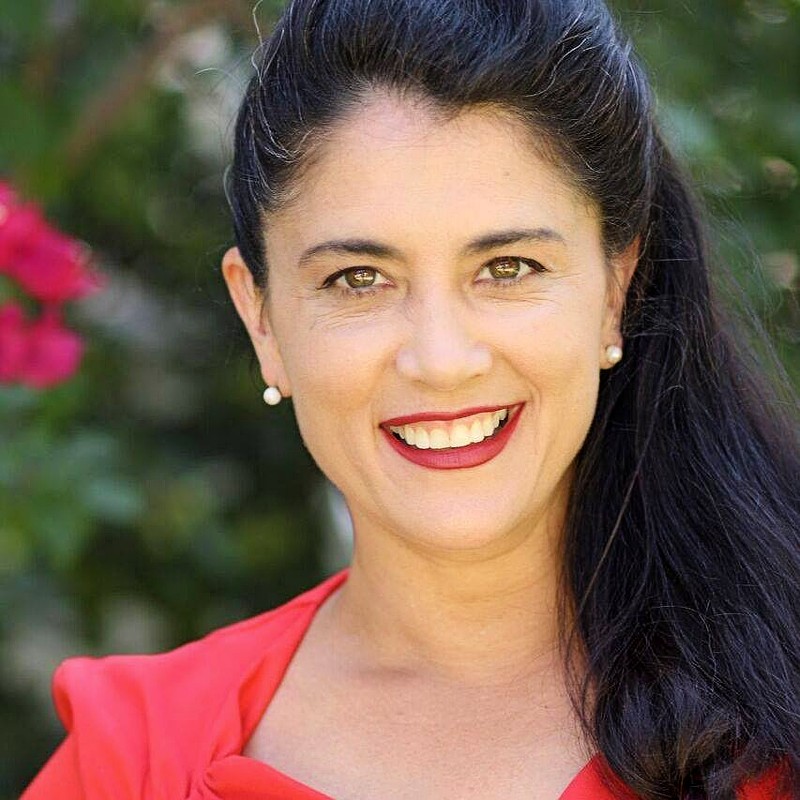
Christina Morales Hemenway got the idea for her new film, Tommy Hollywood and Katie Encino Move to the Midwest to Get Real, in 2005, after she moved back to Michigan following 17 years in Los Angeles.
The Ann Arbor-raised Morales Hemenway—her parents own Elmo's T-Shirts on East Liberty Street—found so much humor in the expansive cultural gap between Left Coast glamor and Midwestern modesty that she wrote a script that ends up lovingly skewering both sides. (The ad line for the film is, "Think Clueless meets Fargo. A mutually offensive comedy.")
Now, nearly 20 years after the initial inspiration, the comedy more commonly called Get Real has its premiere at the Michigan Theatre on Friday, January 5—which is only fitting.
"Russ Collins [executive director] of the Michigan Theater plays the mayor of the small Midwestern town [the characters] end up in," Morales Hemenway says. (Her 2005 film, Dreammaker, also premiered at the Michigan Theater.)
Filmed in Milan, Ann Arbor, and Brighton, the fish-out-of-water comedy pokes fun at our celebrity-obsessed culture. Get Real is Morales' fifth feature outing as a writer-director and it shifts the focus from the romance of her last film, 2019's Bride +1, to satire and tells the tale of two disillusioned "L.A. airheads" who move to a small Michigna town in a last-ditch bid to save their relationship. Actors Chris Daftsios and Joni Allen play the lead roles, and a large part of the rest of the cast is Ann Arbor-area actors—most of whom have never acted before.
ARTS AROUND ANN ARBOR
LIVE VIA FIBER


